
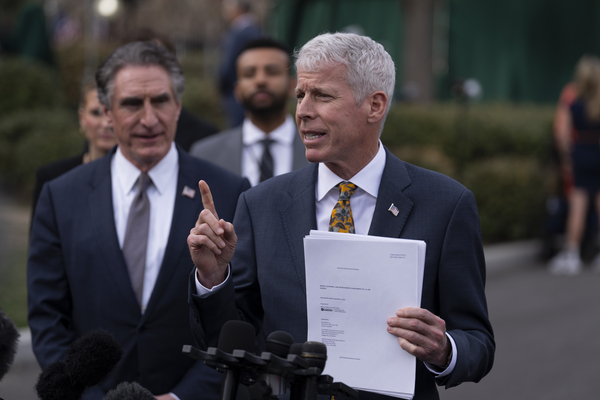
Overview of the event
According to multiple sources, the Atlantic Council-hosted energy conference in Athens brought together senior U.S. officials (including U.S. Energy Secretary Chris Wright and U.S. Interior Secretary Doug Burgum) and European energy ministers and executives, with a focus on accelerating Europe’s exit from reliance on Russian gas and expanding U.S. liquefied natural gas (LNG) exports to Europe.
Key takeaways:
- The U.S. explicitly urged European countries to move faster in phasing out Russian-supplied gas, and emphasised the potential role of U.S. LNG to fill that gap.
- A critical structure under discussion was the so-called “Vertical Corridor” — a north-south gas-transport route anchored in Greece that would channel LNG (and pipeline gas) from southern Europe toward central Europe and Ukraine.
- Greece, in particular, is positioning itself as a strategic LNG and gas-transit hub for the region, leveraging its geographic location and infrastructure developments (such as additional LNG terminals) to deepen ties with the U.S. and offer an alternative to Russian supply chains.
- Concurrently, exploration and upstream investment activity is increasing, for example with U.S. major ExxonMobil partnering for offshore Greek gas exploration.
In short: The strategic energy axis is shifting. Europe is under pressure (from both external geopolitical factors and internal policy) to reduce dependence on Russian gas; the U.S. sees an export opportunity; Greece sees a transit and hub role. Infrastructure, upstream investment, and regulatory/policy alignment are all in motion.
Key Themes & Drivers
From an investment lens, the following themes matter:
- Energy security and geopolitics as a growth driver
The war in Ukraine, sanctions on Russia, Europe’s desire for diversification — these geopolitical forces are compelling structural change in gas supply infrastructure. The U.S. push for LNG exports and Europe’s need for alternatives create tailwinds for companies/infrastructure in the LNG-chain and transit infrastructure. - Transit hub infrastructure build-out
Greece’s role as a link in the supply chain — via LNG import terminals, pipelines northwards (Vertical Corridor) — means capex and infrastructure opportunities (ports, terminals, pipelines, interconnectors). This build-out may create long-dated contractual/monetised assets. - Upstream investment and domestic exploration
Greece, traditionally a gas-importing country, is boosting upstream exploration (offshore exploration blocks) to improve its own production and transit credentials. That can lead to potential production growth, participating company upside, and country risk premium compression. - Regulatory and market restructuring risk
With a strong geopolitical push, regulatory regimes might change (pipeline tariffs, LNG terminal access, transit pricing). Also, environmental/ESG risks from fossil-fuel expansion may become more pronounced (though geopolitics might override some climate concerns). - Supply-chain diversification and competitiveness
For Europe, replacing Russian gas implies sourcing (LNG, pipeline) from alternative suppliers (U.S., Middle East, etc.). This raises competition for transport capacity, liquefaction capacity, and terms of supply — beneficial for competitive players in these spaces.
Opportunities & Investment Implications
Given the above, here are actionable opportunity areas and investment implications:
Opportunity buckets
- LNG Exporters & U.S. Energy Majors: U.S. companies with LNG export capacity and global marketing (especially to Europe) stand to benefit from Europe’s push to diversify away from Russian gas.
- Transit/Import Infrastructure in Europe: Terminal operators, pipeline owners, interconnector developers (especially in Greece and the wider Balkans) may see increased utilisation, new projects, or higher tariffs/contracts.
- Upstream Exploration Assets in the Eastern Mediterranean: Companies that have exploration rights offshore Greece (or partner with upstream majors) may realise value if discoveries are made and production follows.
- Contractors/Service Providers: Firms involved in LNG terminals, pipeline construction, offshore drilling/exploration, engineering & construction have long-lead capital opportunities.
- Countries/Regions acting as Hubs: Greece (and neighbouring transit states) may see economic uplift; sovereign credit or infrastructure-driven plays may emerge (though with political risk).
Risk-adjusted approach
- Ensure that LNG exporters have long-term offtake contracts or access to Europe; spot exposure is riskier.
- Transit infrastructure investments must consider regulatory/regime risk (e.g., tariff setting, contract duration, political stability).
- Upstream exploration is inherently high-risk/high-return; discovery risk, time to production risk, and commodity price risk must be factored.
- Climate/ESG risk: While fossil gas is being emphasised now, the long-term decarbonisation pathway remains; assets must either have future optionality (e.g., hydrogen) or credible de-carbonisation strategy.
- Country risk: Greece is improving, but transit networks through multiple jurisdictions (Bulgaria, Romania, Ukraine) carry political/regulatory risk.
Potential Strategic Moves for a Portfolio
- Long position on LNG-exporting companies with strong European supply contracts — focus on names that are expanding capacity or negotiating with Europe.
- Infrastructure funds or project-finance vehicles targeting European import/terminal/pipeline assets, especially those anchored in the Greece-“Vertical Corridor” axis.
- Explore small-cap upstream companies with exposure to Eastern Mediterranean gas exploration (while limiting exposure to large commodity-cycle risk).
- Overlay geopolitical/regulatory hedges: Given the supply shift away from Russia, companies dependent on Russian gas or poor-transit located may face headwinds. Also, keep an eye on potential regulatory backlash/changes in Europe (e.g., price regulation, environmental permitting).
- Monitor secondary outcomes: For example, cheaper/more-secure gas supply to Europe could improve industrial competitiveness, possibly benefiting energy-intensive sectors in Central/Eastern Europe.
Timeline & Milestones to Watch
- Contract awards and financial close of the vertical corridor pipeline/transport route.
- Final investment decision (FID) on Greek offshore exploration blocks (including timelines for test drilling and first-gas). Reuters
- European policy announcements regarding Russian gas phase-out (especially by 2027) and structural support for LNG import expansion. Reuters
- LNG supply and demand dynamics: U.S. export capacity additions, European import terminal utilisation, freight and logistics constraints.
- Regulatory/ESG updates: how Europe reconciles fossil-gas expansion with climate goals (this tension is already noted).
- Commodity price environment: gas and LNG prices will impact upstream economics and export margins.
Conclusion
From a professional-investor’s perspective, the U.S.–Europe energy realignment anchored around Greece offers a structural opportunity rather than just a cyclical one. The interplay of geopolitics (Russia’s reduced role), infrastructure investment (import terminals, pipelines, transit hubs), and upstream exploration creates multiple entry points.
However, timing, project execution, regulatory clarity, and differentiation between winners and laggards will be critical. A disciplined approach — favouring firms/infrastructures with secured contracts, strong strategic geography (like Greece as a hub), and credible de-risking of upstream/exploration investment — may capture meaningful upside with manageable risk.