
Executive Summary
- New procurement gate: Nordic and border‑state defense leaders made it blunt at AUSA 2025: if a weapon hasn’t proved itself in Ukraine, it’s unlikely to make their short lists. Denmark’s army chief said he’s “never going to buy anything that hasn’t worked in Ukraine,” while Finland’s army commander underscored a two‑year window to sign mature, field‑proven kits. Source: Breaking Defense, Oct 20, 2025.
- What that means: We see a shift from slide‑ware to combat‑validated, quickly fieldable solutions—especially drones/C‑UAS, precision fires, and survivable maneuver. The demand signal stretches beyond platforms into munitions, sustainment, training, and test‑as‑a‑service. Source: Breaking Defense, Oct 20, 2025.
- Programs to watch: Norway’s long‑range precision fires (HIMARS vs. Chunmoo) now targets recommendation by December and award in early 2026, and a multi‑nation CV90 buy is pacing toward Q2‑2026 award “for hundreds” of vehicles. Sources: Breaking Defense, Oct 20, 2025; Defense News, Sep 12, 2025.
- Positioning map: Favor combat‑proven OEMs and, more importantly, the high‑recurrence layers—ammo, rocket motors, guidance/fuzes, spares, training, and drone/C‑UAS ecosystems. Size exposure to award timing and export‑control risk.
What happened (facts)
- At AUSA:
- Denmark’s Maj. Gen. Peter Harling Boysen: “I’m never going to buy anything that hasn’t worked in Ukraine.” Vendors are routinely asked if their kit has been used there.
- Finland’s Lt. Gen. Pasi Välimäki: show‑floor demonstrators are “nice,” but systems operating in Ukraine are the proof that “the actual product works.” He cited a two‑year “window of opportunity” to sign mature systems—“you’re either in or you’re out.” Source: Breaking Defense, Oct 20, 2025.
- Drone push:
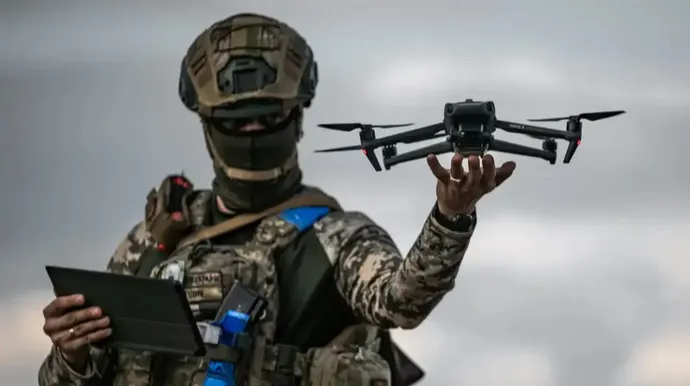
- Latvia is building a drone test range after opening a drone competency center in Riga, aiming to test as close to “real‑life conditions” as possible—ideally with Ukrainian officers present.
- Norway launched a drone program led by an “inspector of drones,” budgeting 1.5 billion NOK over 10 years and already piloting swarming with Six Robotics’ Valkyrie; FPV/interceptor/attack drones are in test with an eye to eventual swarm integration. Source: Breaking Defense, Oct 20, 2025.
- Big-ticket tracks & rockets:
- Norway’s long‑range precision fires down‑select slipped but aims to recommend by Christmas and award early 2026. HIMARS (Lockheed Martin M142) and Chunmoo (Hanwha K239) are noted as leading contenders.
- CV90 mechanized: Norway could buy up to ~80 CV90 Mk IV; separately, BAE expects a multi‑nation CV90 order for “hundreds” of vehicles in Q2‑2026. Sources: Breaking Defense, Oct 20, 2025; Defense News, Sep 12, 2025; Reuters, Apr 22, 2025.
How we read it (mechanism & context)
We see a procurement triage logic taking hold:
- Combat‑validation over bespoke specs. Ukraine is the industry’s live-fire proving ground. “Worked in Ukraine” compresses technical risk and time‑to‑field—a decisive edge when leaders quote two‑year windows.
- Portfolio ≠ platform. The profit pool is migrating to ammunition/rockets, spares & readiness, electronics & C2 integration, and training/test ranges that help vendors cross the “Ukraine‑validated” bar before tenders.
- Regional commonality. Nordic/Baltic buyers are signaling fewer “national special requirements,” favoring common fleets (e.g., CV90 family) and shared test/validation infrastructure—good for scale economies and supplier utilization.
Investment implications — where we’d position (and why)
1) Munitions & precision effects (multi‑year)
- Thesis: Regardless of platform winners, volume ammo (155 mm shells/propellants/fuzes), GMLRS/ATACMS‑class rockets, and Chunmoo‑family munitions are the recurring revenue core. Combat‑validated kits see easier budget defense and faster replenishment cycles.
- Catalysts: Nordic/Baltic reorder cadence, framework agreements, and co‑production MOUs tied to Ukraine backfill.
- Risks: Nitrocellulose/chemicals bottlenecks; ITAR/EU export controls; pacing of U.S./EU industrial‑base expansions.
Sources: Breaking Defense, Oct 20, 2025; program coverage cited below.
2) Drone & counter‑drone stack (0–36 months)
- Thesis: Latvia’s test range + Norway’s swarm/FPV/ISR push + EU “drone wall” discussions create pull for small UAS, C‑UAS sensors/effectors, EW & RF detection, networked autonomy, and training/instrumentation. We prioritize vendors with field metrics (MTBF, kill chain closure times) over brochure specs.
- Catalysts: Test‑range openings, swarm trials, national C‑UAS tenders; standardized open interfaces.
- Risks: Fragmented standards, spectrum policy, rapid obsolescence.
Source: Breaking Defense, Oct 20, 2025.
3) Precision fires competitions (6–18 months)
- Thesis: Norway’s LRPF award (HIMARS vs. Chunmoo) is a near‑term swing factor; ripple effects on launcher integration, reloaders, C2, and rocket supply chains will follow. Treat winner‑specific exposure as event‑driven; the safer lane is ammunition ecosystems that benefit either way.
- Catalysts: Government recommendation (Dec 2025 target), contract award (early‑2026), delivery/IOC timelines.
- Risks: Budget re‑phasing, U.S. FMS timelines, offsets/localization hurdles.
Source: Breaking Defense, Oct 20, 2025.
4) Mechanized fleets & sustainment (12–36 months)
- Thesis: The CV90 pathway looks like a common Nordic/Baltic fleet with a Q2‑2026 multi‑country award in view. Beyond new‑builds, we like long‑tail spares, upgrades (APS, sensors, BMS), and depot partnerships.
- Catalysts: Final joint procurement scope, per‑country workshare, training/simulator deals.
- Risks: Negotiation drift, competing IFV solutions, budget trade‑offs.
Sources: Defense News, Sep 12, 2025; Reuters, Apr 22, 2025; Breaking Defense, Oct 20, 2025.
5) Test‑as‑a‑service & training (emerging)
- Thesis: “Prove it in Ukraine—or at least under Ukraine‑like conditions.” That elevates instrumented ranges, operational evaluation services, and live/virtual/constructive training that simulates contested EM spectrumand UAS swarms. Early movers can become gatekeepers to procurement.
- Catalysts: Range funding, multinational test consortia, OEM partnerships.
- Risks: Classification barriers; duplicative national facilities.
Source: Breaking Defense, Oct 20, 2025.
Catalysts & timing
- Q4‑2025: Norway LRPF recommendation targeted by December; Latvia accelerates test‑range planning; Nordic states refine FY‑26 budgets. Source: Breaking Defense, Oct 20, 2025.
- Early 2026: LRPF contract award; possible CV90 joint‑procurement milestones; more national drone/C‑UAS tenders. Sources: Breaking Defense, Oct 20, 2025; Defense News, Sep 12, 2025.
- Q2‑2026: CV90 multi‑nation award “for hundreds” expected by June (company guidance). Source: Defense News, Sep 12, 2025.
Scenarios (12–24 months)
- Base (55%) — “Combat‑proven or bust”: Nordic/Baltic buyers continue prioritizing Ukraine‑validatedsystems; awards proceed near guidance; munitions/C‑UAS/training outgrow platforms on a percentage basis.
- Bull (25%) — “Fast‑track buys”: Threat environment worsens; governments pull forward buys and expand quantities; drone/C‑UAS budgets step‑change; shared fleets drive better unit economics for suppliers.
- Bear (20%) — “Procurement friction”: Budget re‑phasing, export‑control holdups, or industrial bottlenecks push right; awards slip; OEMs with over‑indexed single programs underperform, while ammo/sustainment cushion the downside.
Risks & what could go wrong
- Export controls/ITAR: Cross‑border content and tech‑release decisions can stall otherwise “decided” buys.
- Industrial bottlenecks: Propellants, rocket motors, electronics, and skilled labor remain constraints; late deliveries hit earn‑outs and customer satisfaction.
- Competition & politics: Alternate launchers/IFVs or “buy national” swings can reshape awards.
- Validation drag: If vendors can’t demonstrate Ukraine‑like performance at home ranges, time‑to‑award elongates and costs rise.
- FX & macro: Nordic currencies vs. USD/EUR add volatility to imported subsystems.
What we’re watching (KPIs)
- Award/contracting dates (Norway LRPF; CV90 joint buy).
- Munitions throughput (monthly 155 mm and rocket output; backlog visibility).
- Drone/C‑UAS metrics (intercept success, MTBF, swarm scaling results).
- Training & range utilization (OEM partnerships; instrumented test‑event cadence).
- Sustainment performance (spares fill‑rates, fleet availability, depot cycle times).
Sources
- Breaking Defense — “To sell weapons, prove they worked in Ukraine, say military leaders from NATO border nations” (Oct 20, 2025).
- Defense News — “BAE braces for biggest‑ever order of CV90 combat vehicle in 2026” (Sep 12, 2025).
- Reuters — “Sweden eyes purchase of combat vehicles with Norway, Lithuania, Finland” (Apr 22, 2025).
Bottom line (how we’d act)
We lean into the recurring layers—ammo/rockets, C‑UAS, training/test—where spend compounds regardless of which platform wins. For platform exposure, we gate entries to award milestones (e.g., Norway LRPF; Q2‑2026 CV90) and size to event risk. In this market, combat‑validated and quickly fieldable beats exquisite—and the cash flows increasingly sit in the ecosystem that keeps those systems fighting.