What Happened
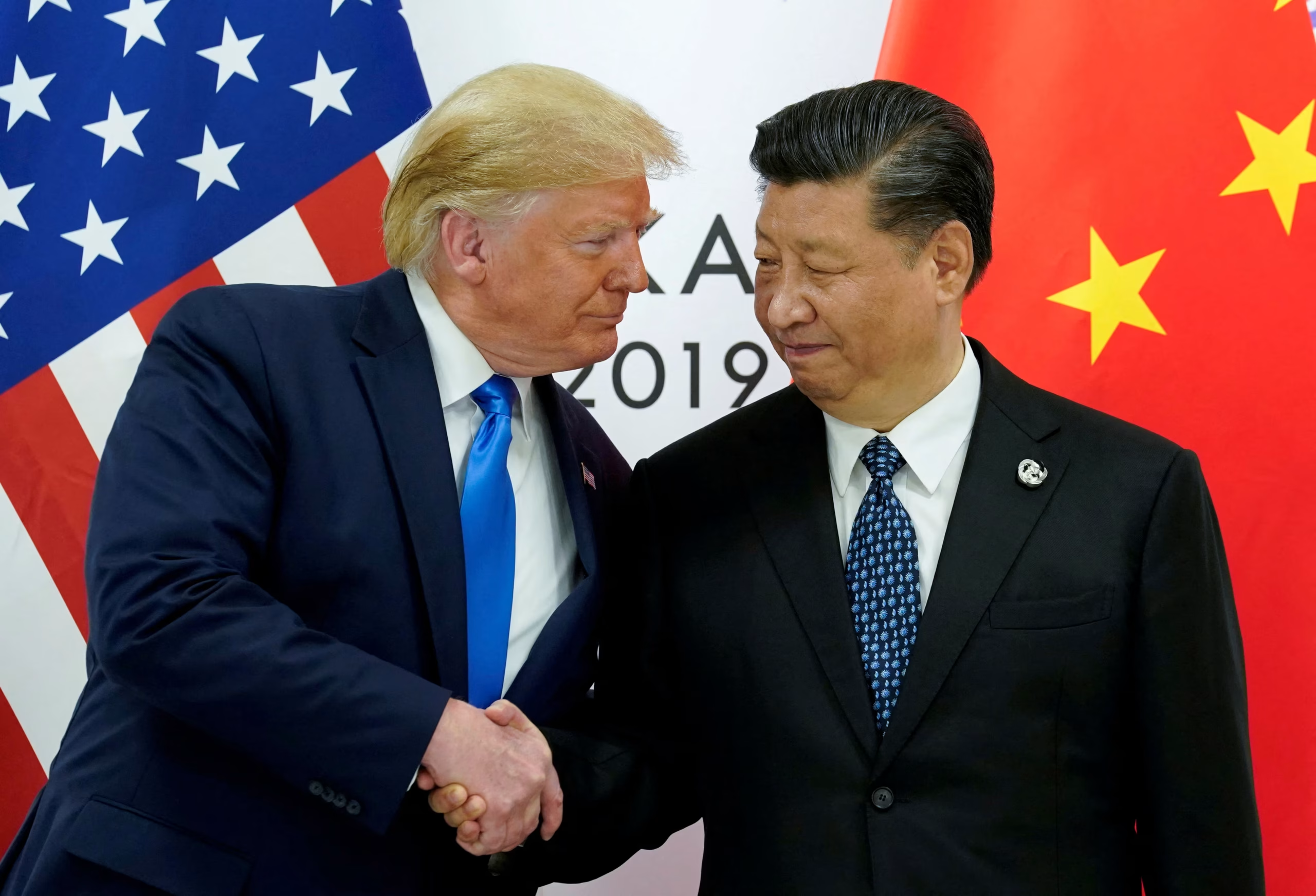
- Trump announced that he is considering imposing a “massive increase” in tariffs on Chinese imports.
- He also indicated he might cancel an upcoming summit with Chinese President Xi Jinping, citing China’s recent restrictions on rare earth or critical minerals exports as justification.
- The market reacted sharply: U.S. equity indices sold off, especially in tech and trade-exposed names.
- The dollar weakened, and bond yields dropped. Reuters+1
Why It Matters Strategically & for Markets
This is not just saber-rattling — it could materially reshape trade, supply chains, and capital flows. Key ramifications include:
- Supply chain risk & sourcing pressure
Many tech, manufacturing, rare earth, battery, semiconductor, and clean energy firms depend on Chinese exports of components, raw materials, or processed inputs. Increased tariffs or export restrictions threaten cost inflation, short supply, and production disruption. - Reversal of global trade liberalization trends
If the U.S. re-escalates tariffs aggressively, global trade norms could shift again toward protectionism. This adds structural uncertainty for multinational firms, global investment, and capital allocation decisions. - Commodity and critical minerals impact
Because the trigger is China’s restrictions on rare earth / critical materials exports, access to those minerals (like neodymium, dysprosium, cobalt, etc.) is under spotlight. Countries and firms may accelerate vertical integration or secure alternate sources. - Valuation & risk premium repricing
The threat introduces higher geopolitical risk premium. Investors will reprice riskier, trade-exposed equities downward; safe havens may benefit. Multiples on growth names might compress due to increased uncertainty. - Retaliation & feedback loops
China can respond with countermeasures (tariffs, export curbs, restrictions on U.S. firms in China). This could escalate into broader trade conflict, harming global growth.
What to Watch
- Which goods / sectors are hit — are tariffs broad (all goods) or selective (e.g. tech, critical minerals, electronics)?
- Timing & implementation — whether threats are delayed for negotiation or act quickly. The window between threat and execution is a key risk zone.
- China’s countermeasures — look for retaliatory steps (export bans, tariffs, regulatory pressure on U.S. firms).
- Impact on supply / input prices — watch rare earth, semiconductor, battery, metals, intermediate goods costs.
- Earnings guidance shifts — companies will likely adjust forward guidance to reflect higher input cost / margin pressure.
- Capital flows — see if capital rotates out of U.S./China — into safer sectors or geographies (e.g. India, Southeast Asia, Europe).
Tactical Ideas & Positioning
Here’s how I’d think about adjusting exposure and hedging:
Defensive / Hedging Moves
- Short or hedge exposures in trade-sensitive sectors (electronics, semiconductors, intermediate manufacturing) especially ones with heavy China input dependency.
- Increase exposure to safe/defensive assets: high-quality bonds, cash, defensive sectors like utilities, consumer staples.
- Shift to regional suppliers / near-shoring names — companies less reliant on China supply chains.
Opportunistic / Alpha Plays
- Critical minerals, rare earths, mining / processing outside China
Producers and processors in Australia, U.S., Canada, Africa may benefit as demand shifts away from Chinese supply. - Supply chain relocation / logistics / infrastructure names
Firms enabling supply chain reconfiguration (warehousing, transport, regional manufacturing) may see inflows. - Sovereign / domestic manufacturing plays
In the U.S., firms focused on reshoring or domestic critical component manufacturing could get state or federal support. - Trade arbitrage / tariff-resilient firms
Businesses with flexible sourcing, diversified supply chains, strong local production may stand out.