What the Deal Is
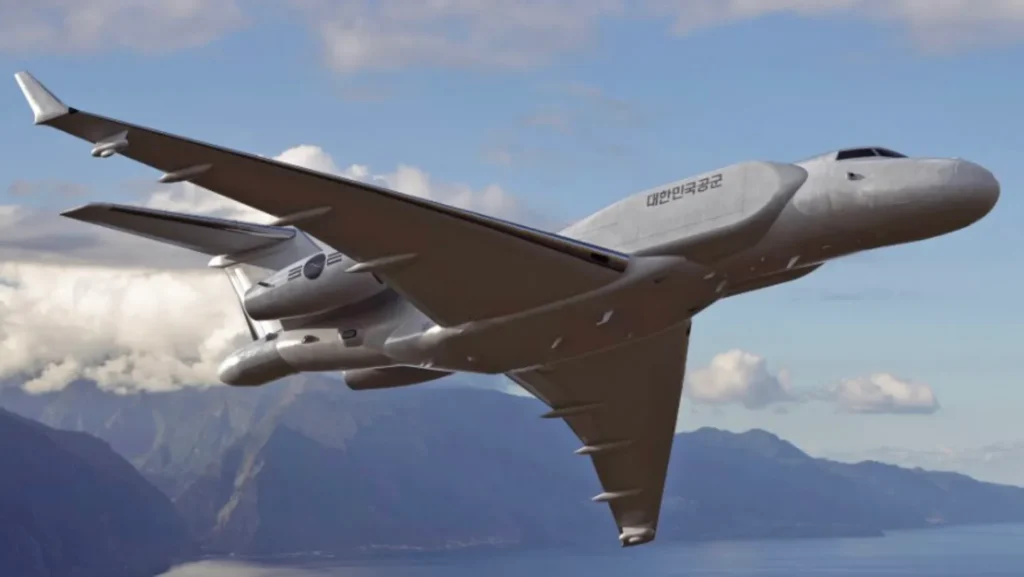
- South Korea’s Defense Acquisition Program Administration (DAPA) has selected L3Harris’s Phoenix / Global 6500 solution as its winner in the AEW&C II competition.
- The project is budgeted at KRW 3.1 trillion (around US$2.2 billion) with a timeline aiming for full delivery by 2032.
- This new fleet will supplement or eventually replace some of South Korea’s existing Boeing E-7A (Peace Eye / E-737) AEW aircraft, which have had low mission availability issues.
- The winning proposal integrates Israel’s Elta EL/W-2085 radar, a conformal (non-rotating) multi-band AESA system, providing 360° coverage.
- The evaluation metrics that tipped the decision toward L3Harris included operational suitability, lifecycle cost, and contribution to the domestic defense industry. While Saab’s GlobalEye bid had advantages in acquisition cost and contract terms, it lost out on the broader evaluation scores.
- Some of the aircraft work (especially later units) will be done in-country by Korean Air, and sustainment and local industry participation are part of the plan.
Why This Matters: Strategic & Market Implications
Enhanced Situational Awareness & Regional Posture
- For South Korea, adding a better AEW fleet is a big push to maintain airspace dominance, especially against threats from North Korea, increasing aerial activity in the region, and overlaying multi-domain detection capability (air, missile, drones).
- The choice of a conformal (no rotodome) radar design implies a desire for lower drag, reduced signature, and improved stealth / performance tradeoffs, which is more advanced than classic dome-style AEWs.
Industrial & Technology Transfer Value
- The requirement that local firms (like Korean Air, LIG Nex1, Ace Antenna) participate in assembly, integration, support, and sustainment helps anchor value domestically. This tie-in matters to offset import dependency and ensure maintainability in the long run.
- The modular architecture and “open systems” approach promised in the proposal may allow incremental upgrades (radar enhancements, sensor fusion, AI processing) over the aircraft life.
Competitive Signal & Export Implications
- This is a global “reference customer” win for L3Harris’s Phoenix / Global 6500 AEW configuration, which could help it compete in other markets eyeing modern AEW platforms.
- It also signals the decline (or pressure) on competing systems like Saab’s GlobalEye in contest arenas where lifecycle cost, industrial offset, and maintainability matter as much as sensors.
Risks & Headwinds
- Schedule risk & delays: Aircraft development and integration programs often slip. Delays in radar integration, flight testing, or certification are common.
- Cost overruns: The upfront contract covers base scope, but changes, integration complexity, inflation, or supply chain cost increases may drive additional budget pressure.
- Technological obsolescence: Radar & sensor technology evolve rapidly. If the baseline system is locked in too rigidly, it risks obsolescence mid-fleet life.
- Geopolitical / export restrictions: Using Israeli or U.S. tech components may invoke export control, licensing, or restrictions. Upgrades may be constrained.
- Adaptation & sustainment challenge: Local firms must ramp competence; sustaining high availability over decades is a heavy logistical, training, and supply chain effort.
Investment & Strategic Plays to Watch
Given this development, here are some strategic angles I’d monitor or consider:
| Theme / Exposure | Why It Could Capture Value | What to Watch / Invest In |
|---|---|---|
| L3Harris (and associated subsystems) | This is a large win in a high-value defense segment. Sustained revenue from delivery, upgrades, support, software updates. | Monitor contract execution, margins, future upgrades / retrofit awards |
| Radar / sensor firms | EL/W-2085 radar is the sensor backbone. Firms in radar tech, GaN modules, signal processing, sensor fusion benefit. | Component suppliers, follow-on contracts, export potential |
| Local defense primes / integrators in Korea | Korean Air’s role in integration, maintenance, and sustainment can be a stepping stone for further state projects | Korean defense / aerospace equities, subcontractor firms, integration partnerships |
| Support & sustainment / lifecycle services | Over decades, aircraft demand spare parts, upgrades, maintenance, avionics refresh, software patches | MRO / defense services companies, parts suppliers, avionics firms |
| Other AEW / surveillance competitors | The bump in attention around AEW & airborne surveillance may benefit other providers in markets upgrading legacy fleets | Watch competing radar / aircraft firms bidding in other countries |
What to Monitor (Signals for Upside or Trouble)
- The formal contract signing expected around November; exact terms (margin, options, change orders) will signal the strength of the deal.
- Prototype / flight test milestones: radar integration, conformal array behavior, endurance, cl performance, reliability metrics.
- Local industry participation: how much Korean Air, LIG Nex1, Ace Antenna get from the subsystems and maintenance work — and whether that meets strategic offset expectations.
- Follow-on contracts or aftermarket upgrades: radar enhancements, new sensor payloads, electronic warfare add-ons.
- Other AEW procurement deals globally: competing programs in Asia, Europe — whether this win catalyzes further bidding for L3Harris.
- Cost, delay, or performance slippages: any negative news in technical execution will be critical risk signals.