Executive Summary
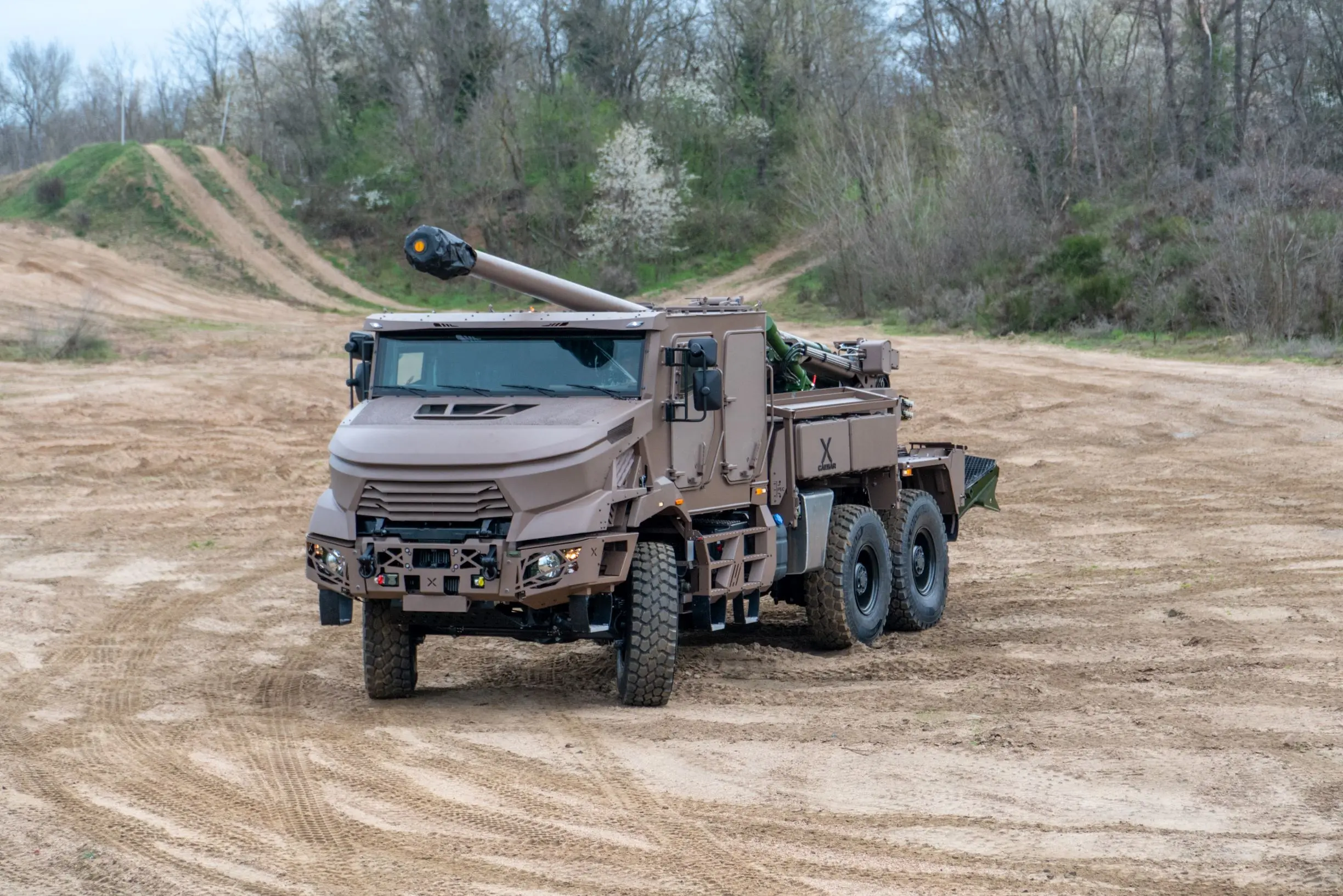
- What changed: Leonardo DRS and KNDS (Nexter/KMW) formed a teaming agreement to offer the CAESAR 155mm truck‑mounted howitzer to the U.S. Army’s Mobile Tactical Cannon (MTC) effort—DRS as prime integrator, KNDS providing the artillery system and ammunition portfolio. The disclosure came at AUSA 2025. Source: Defense News, Oct 14, 2025.
- Why now: After canceling ERCA in 2024, the Army is re‑widening the aperture—issuing a fresh RFI (Sept 30, 2025) to gather options it can drop into a “Transforming in Contact” brigade for soldier experimentation. Sources: Defense News, Mar 11, 2024; SAM.gov RFI, Sept 30, 2025; Inside Defense, Oct 1, 2025; Army Public Affairs, 2025.
- Competitive field: Expect CAESAR to square off against U.S.‑assembled truck or wheeled systems (e.g., Elbit America’s MTC/ATMOS lineage; potentially BAE’s Archer path) and legacy/tracked solutions where relevant. The Army explicitly wants a 155mm self‑propelled artillery “system of systems.” Sources: Inside Defense, Oct 1, 2025; company materials, 2025.
- Investor angle: Near‑term opportunities center on U.S. prime‑led integration, domestic content/localization, 155 mm supply chain, and digital fires/C2—with upside optionality in rearm/loader vehicles, training & sustainment. Longer‑dated risk/reward hinges on down‑select timing, Buy American/ITAR contours, and munitions cadence.
What happened (facts)
- Teaming announcement: Leonardo DRS and KNDS will offer CAESAR for the Army’s Mobile Tactical Cannon line of effort. DRS will act as prime; KNDS brings a combat‑proven 52‑cal gun and ammunition suite. KNDS emphasized lessons from Ukraine, noting roughly 120 CAESARs in service there, and said the weapon can be integrated on a U.S. tactical truck. Source: Defense News, Oct 14, 2025.
- Army procurement posture: The Army scrapped ERCA in Mar 2024 but kept the long‑range cannon requirement, signaling it would pivot to existing solutions. On Sept 30, 2025, it posted an RFI (Self‑Propelled Howitzer‑Modernization / MTC) asking industry about availability, fires network integration, and even how quickly six howitzers and six rearm systems built in the U.S. could be delivered for soldier experimentation. Sources: Defense News, Mar 11, 2024; SAM.gov RFI, Sept 30, 2025; Inside Defense, Oct 1, 2025.
- Context: The Army has assessed foreign systems since 2021 and had contemplated a Yuma demo in Jan 2026before shifting to the “Transforming in Contact” model (get systems to units, experiment in the force). Source: Defense News, Oct 14, 2025; Army Public Affairs page on Transforming in Contact, 2025.
- Background balances: Congress’ research arm summarizes the SPH‑M path post‑ERCA: keep the range/volumeimperative, leverage mature systems, and integrate via a system‑of‑systems approach (gun + rearm + digital fires + logistics). Source: CRS, Mar 25, 2025.
How we read it (mechanism & context)
We see a pragmatic shift from a bespoke long‑gun (ERCA) toward fieldable, lower‑risk, modular artillery. The forcing function isn’t technology scarcity—it’s time‑to‑field, munitions throughput, and C2 integration under budget and manpower constraints. A truck‑mounted 52‑cal like CAESAR fits the Army’s shoot‑and‑scoot, rapid mobility, and sustainment goals, provided it’s U.S.‑localized (chassis, electronics, sustainment tail) and digitally stitched to the Army’s fires network.
For investors, that means the profit pool is broader than the gun: U.S. integration and content, rearm/loader vehicles, digital fire‑control, training/sim, and—critically—155 mm munitions (propellant lines, projectiles, fuzes, precision kits). The Army’s separate push to expand 155 mm production buttresses this thesis. Sources: Army.mil production update, 2025; CRS, Mar 25, 2025.
Investment implications — where we’d position (and why)
1) U.S. prime/integrator (Leonardo DRS) — 6–24 months
Thesis: As prime, DRS is the gatekeeper for U.S. content (truck/chassis, power, comms, armor kits), battle‑management integration, and the rearm/loader ecosystem. Even a limited soldier‑experiment tranche (e.g., six + six) can translate into NRE funding, prototype margins, and optionality on a follow‑on program.
Catalysts: RFI down‑select signals; AUSA follow‑ups; any U.S. build/assembly site disclosures; demo schedules; FY‑26/27 budget marks.
Risks: Policy pushback on foreign‑designed guns, competitor localization claims, or a pivot back to tracked solutions. Sources: Defense News, Oct 14, 2025; SAM.gov RFI, Sept 30, 2025; Inside Defense, Oct 1, 2025.
2) U.S. truck/chassis & automotive subsystems — 6–24 months
Thesis: CAESAR’s 6×6/8×8 architecture relies on a heavy tactical truck; a U.S. integration path opens demand for chassis, axles, suspensions, protected cabs, power distribution, and APU/cooling.
Catalysts: Named U.S. truck partner; armor/protection kit choices; mobility trials outcomes.
Risks: Competing bidders propose turreted or tracked concepts that dilute truck volumes. Sources: Defense News, Oct 14, 2025; company data sheets.
3) Digital fires & network integration — 6–36 months
Thesis: The RFI explicitly asks about fires network integration. Vendors of fire‑control computers, radios, battle‑management software, targeting sensors (and training/sim) ride every configuration, win or lose.
Catalysts: Army tactical fires architecture updates; interoperability testing; MOSA requirements.
Risks: Proprietary stovepipes or protracted ATO/cyber approvals. Sources: SAM.gov RFI, Sept 30, 2025; CRS, Mar 25, 2025.
4) 155 mm munitions & precision kits — multi‑year
Thesis: Regardless of which gun wins, the Army is surging 155 mm output. Suppliers across projectiles, propellants, fuzes, and precision kits (e.g., guidance kits, Excalibur‑class effects) should see sustained demand as brigades re‑arm and train.
Catalysts: Arsenal/industrial‑base expansions; multi‑year munitions contracts.
Risks: Bottlenecks in nitrocellulose/chemicals, site permitting, or budget trade‑offs. Source: Army.mil, 2025.
5) Second‑order: rearm & support vehicles, spares, training
Thesis: The RFI’s interest in rearm systems implies incremental fleets of ammo carriers, cranes, automated reloaders, plus spares, test gear, and courseware—sticky revenue with long tails.
Catalysts: Soldier feedback, safety/throughput metrics in experiments.
Risks: If the Army favors turreted autoloaders or consolidated solutions, standalone rearm volumes shrink. Sources: SAM.gov RFI, Sept 30, 2025; Inside Defense, Oct 1, 2025.
Catalysts & timing
- Near term (Q4‑2025): RFI responses (due early Oct) are digested; Army refines soldier‑experimentation planand unit selection. Sources: SAM.gov RFI, Sept 30, 2025; Inside Defense, Oct 1, 2025.
- 2026: First soldier experiments under Transforming in Contact; potential chassis/integration “reveal” by primes; early contracting actions for prototypes/NRE. Sources: Defense News, Oct 14, 2025; Army Public Affairs, 2025.
- Budget cycle: FY‑26/27 marks for SPH‑M/MTC; watch procurement vs. RDT&E mix for signal on pace/scale. Source: CRS, Mar 25, 2025.
Scenarios (12–36 months)
- Base (55%) — “Experiment then scale modestly”: Army executes soldier trials with two–three competing solutions; modest LRIP‑style buys begin late‑2026/2027; revenue accrues to U.S. integrators, munitions, rearm/C2.
- Bull (25%) — “Fast‑track Stryker brigades”: Positive soldier feedback + munitions surge → accelerated fielding to close capability gaps; larger truck/chassis volumes, stronger pull‑through to training & sustainment.
- Bear (20%) — “Pivot or pause”: Budget pressure or doctrine debates delay MTC; Army pivots toward tracked modernization or long‑range missiles as the near‑term gap filler; prototypes linger without scale.
Key risks
- Policy & industrial base: Buy American/ITAR constraints, Congress’ views on foreign‑designed guns, and U.S. localization expectations.
- Integration & schedule: “U.S. tactical truck” integration, crew protection, and digital fires certification can slip schedules.
- Budget trade‑offs: Competing Army priorities (counter‑UAS, drones, long‑range missiles) crowd out cannon funding.
- Munitions bottlenecks: Propellant/chemicals and workforce constraints slow 155 mm output growth, limiting training and readiness metrics.
What we’re watching (KPIs)
- Army down‑select signals and soldier‑experiment timelines under Transforming in Contact.
- U.S. localization disclosures: chassis partner, assembly site, supply‑chain depth.
- Digital integration: interoperability test results, MOSA compliance, cyber approvals.
- 155 mm production cadence: monthly/quarterly throughput, backlog, precision‑kit adoption.
- Safety/throughput data: reload times, shoot‑and‑scoot metrics, crew workload from soldier trials.
Sources (no links)
- Defense News — “Leonardo DRS, KNDS team up on Caesar bid for Army cannon” (Oct 14, 2025).
- Defense News — “US Army scraps Extended Range Cannon Artillery prototype effort” (Mar 11, 2024).
- SAM.gov — “Self‑Propelled Howitzer‑Modernization (SPH‑M) RFI on Mobile Tactical Cannon (MTC)”(posted Sept 30, 2025).
- Inside Defense — “Army resumes self‑propelled howitzer competition” (Oct 1, 2025).
- CRS — “The Army’s Self‑Propelled Howitzer Modernization (SPH‑M) Program” (Mar 25, 2025).
- U.S. Army Public Affairs — “Transforming in Contact” explainer; and “Army seeks to expand and accelerate 155 mm production” (2025).
Bottom line (how we’d act)
We treat MTC as a real but staged opportunity: accumulate exposure to U.S. prime/integration work, domestic truck & subsystems, digital fires, and 155 mm munitions, sizing positions to prototype‑scale risk until the Army sets a clear fielding path. If soldier‑experimentation feedback is strong and U.S. localization is credible, we’d look to add on any “policy headline” dips—owning the integration and sustainment stack where the stickier cash flows live.