
These three stories, taken together, are screaming the same message: “The era of hype & cheap capital is giving way to execution, structural constraints, and real-world friction.”
- The BHP–Anglo saga shows that even big miners can’t just throw money at assets and expect success — regulation, valuation complexity, and commodity-cycle discipline matter.
- Canada’s housing plan underlines that ambitious social & infrastructure projects face real capacity / supply-chain / execution limits; the winners are those who build supply-chain resilience, modular solutions, and manage execution risk.
- The OpenAI pivot signals to the entire tech/AI sector: if you want to survive next decade, you need governance, compliance, and sustainable monetization, not just hype and burn.
So as an investor, the smart money won’t be on “fast-money hype plays.” It’ll be on infrastructure enablers, disciplined operators, compliance-ready firms, and real-asset backed businesses.
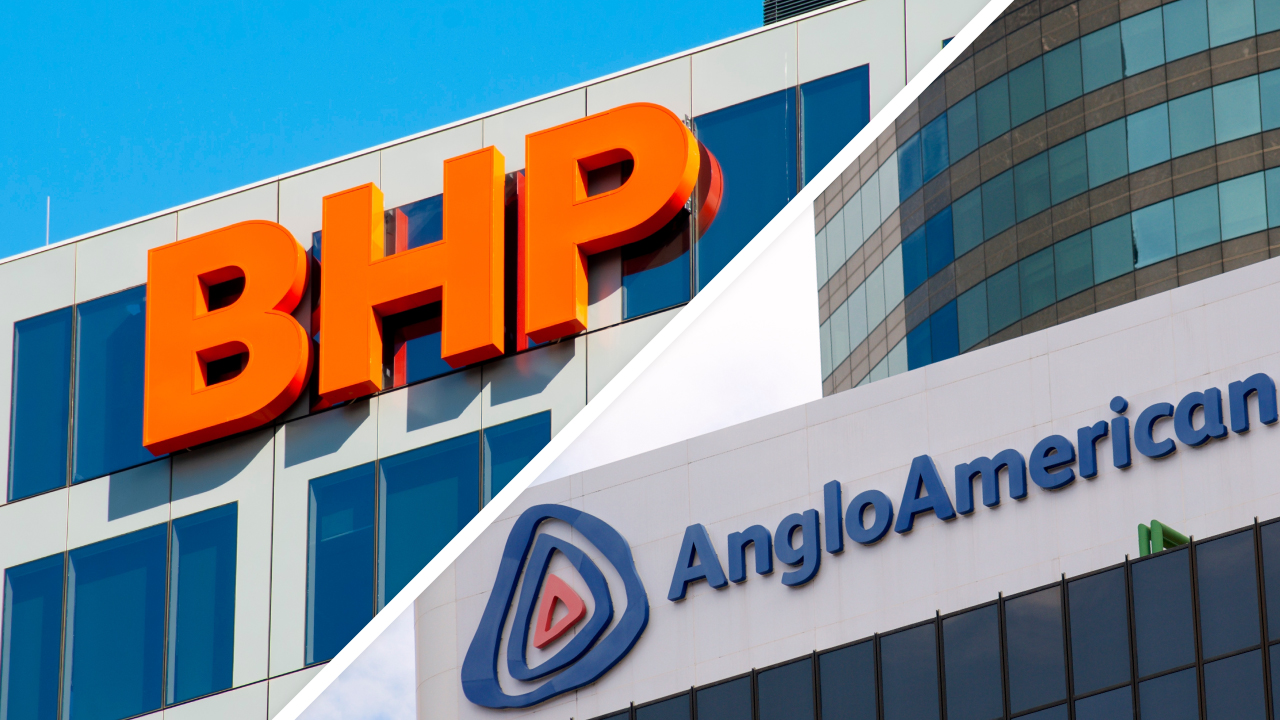
Good: BHP Group’s failed $53 B bid for Anglo American
Whats Up?:
BHP reportedly offered roughly £34/share (~US $53 billion total) for Anglo American — a ~24% premium over Anglo’s prior share price. MINING.COM
The offer was a mix of stock and cash, but Anglo’s board rejected it — largely because they believe their planned merger with Teck Resources (a deal already on track) offers more value. After the rejected bid, BHP confirmed it’s withdrawn from pursuit and will instead focus on its own growth strategy.
So the headline: a major takeover attempt just fizzled, but the underlying scramble for copper and critical minerals stays very real.
What’s Next:
- Consolidation pressure remains: The fact BHP tried again shows major miners are still hunting acquisitions — but the failure suggests valuations or complexity (spinning off non-core assets) are high barriers.
- Copper / critical-minerals dynamic strengthens: Anglo + Teck (if that merger proceeds) may still yield a large new copper-heavy player. The failed BHP bid reinforces demand for assets with clean copper portfolios. TS2 Tech
- Valuation gap & M&A jitters for big miners: For BHP, walking away might spook some investors who hoped for scale deals — may lead to lower market enthusiasm or volatility, especially as global demand for metals fluctuates.
- Better long-term clarity for Anglo/Teck path: Without BHP interference, the Anglo-Teck merger path gets clearer (though still subject to shareholder/regulatory approvals), which may give investors a cleaner copper-transition play.
What Can You Do?:
If you’re bullish on copper/critical minerals: Focus on Anglo American (AAL) + Teck Resources (TECK) — the merged entity could benefit from consolidation + rising global copper demand (for electrification, renewables, batteries).
For diversified miners with clean metals portfolios: BHP (BHP) itself remains a core pick if you believe in its organic growth and commodity-cycle upside — but accept lower M&A upside risk.
Avoid high-complexity, “decommissioned assets” miners: Firms with mixed portfolios (precious metals + coal + legacy mines) may struggle to attract bids, especially under environmental pressure — so overweight the pure-metal/copper-heavy ones.
Watch for commodity cycles & macro demand: Copper demand (and price) will likely drive valuation swings more than takeover speculation — keep a medium-term horizon (3–7 years) focusing on demand tailwinds (green energy, electrification).
Bad: Canada’s housing ramp-up under Mark Carney — skepticism creeping in

Whats Up?:
The Canadian federal government, under Carney, launched a massive housing initiative via a new agency called Build Canada Homes (BCH), aiming to double the pace of homebuilding over the next decade, using modular / factory-built methods and leveraging public lands. Prime Minister of Canada
But a recent warning from a watchdog suggests there is “big doubt” about meeting the pledge — difficulties in building capacity, red tape, supply-chain and labour constraints, and challenges penetrating provincial/municipal regulations. (As summarized from recent reporting)
So we have a bold vision + structural constraints clash: the ambition is high, but execution will be the real test.
What’s Next:
- If successful — big tailwind for builders, materials, housing-related industries: Modular-home manufacturers, building-material suppliers, contractor networks, possibly prefabricated housing firms — all would scale up.
- If delayed or blocked — risk of political blowback, misallocation of capital: Builders and suppliers who bet heavily on rapid build-out may suffer if permits stall or costs blow up; housing prices could stay high, worsening affordability (counter to policy goals).
- Long-term structural shift: If modular + factory-built methods work, construction costs and timelines may permanently shift downward → a cheaper housing supply baseline in Canada over the next decade.
- Regional & resource supply-chain pressure: Mass demand for lumber, steel, modular components, and transport/logistics could put stress on supply chains and potentially create inflationary pressure in related sectors.
What Can You Do?:
- Prefabricated/modular housing manufacturers and building-materials suppliers: Firms that specialize in modular homes, mass-timber, prefab construction, or provide materials (lumber, engineered wood, panels). These are long-term “infrastructure build” plays.
- Canadian mid-cap homebuilders/contractors: Some well-positioned homebuilders or developers that adapt quickly may win contracts under the new regime — could be re-rated if they get steady pipeline of government-backed builds.
- Cautious on pure developers: Risky to load up on pure-play residential developers before you see permits or early builds. Better to wait for concrete project approval or early visible builds.
- Long-term play on undervalued real estate/REITs: If supply ramp is real, over time housing pressure diminishes — leads to potential stabilization or even price corrections in overheated regions. Could be good for REITs, rental-housing plays, maybe margin pickup in home-supply chains.
Ugly: Altman Declares “Code Red”

Whats Up?:
OpenAI’s CEO has publicly addressed controversies/concerns around AI deployment (bias, misuse, social impact) acknowledging risks. In doing so, AI firms globally are being more transparent, but also signifying that AI is entering a new phase — from pure hype to accountability & regulation. The shift signals that AI companies may need to balance growth ambitions with ethical frameworks, regulation compliance, and risk management, which may slow down uncontrolled expansion but improve long-term structural legitimacy.
What’s Next:
- Increased regulatory & compliance burden: Governments may start imposing standards — audit trails, safety checks, bias testing, maybe even licensing — which increases cost & slows down time-to-market for features and products.
- Higher barriers to entry: For small AI startups, the cost of compliance may deter scaling. That could consolidate power in big firms that can absorb those costs (like OpenAI, Microsoft, Google).
- Quality over hype: Market may start favoring profitability, safe products, responsible AI — less “fake-it-til-you-make-it.” Investors will demand realism, not just vision.
- Potential value reset: Companies that were riding pure growth/scale narratives may see their valuations re-rated downward if regulatory costs or slower rollout delays materialize.
What Can You Do?:
- Favor large, diversified tech firms with deep pockets (not risky SMEs): Big incumbents that can absorb compliance cost — e.g. platform-scale firms offering AI — are better bets than small, high-risk AI-pure startups.
- Watch for “AI-safety / compliance infrastructure” plays: Firms that build AI governance, auditing, compliance toolkits, bias-detection, security for AI — these are going to be increasingly important sector-wide (less sexy, but essential).
- Avoid over-leveraged “moon-shot” AI startups unless you size small: The new regime favors disciplined execution; moonshots with aggressive burn + minimal governance may get hammered.
- Long-view on monetization over hype: Bet on firms that show reasonable monetization paths (enterprise AI, subscription models, services), not those banking purely on user growth or valuation fluff.
THEME 1 — Copper, Critical Minerals & Big-Miner Consolidation
(BHP-Anglo failed deal, Teck–Anglo copper merger potential)
Top Tickers
1) TECK (Teck Resources) — purest North American copper-levered play
Why:
- Major copper growth pipeline.
- If Anglo merger proceeds, becomes part of a massive copper dynasty.
Watch: - Copper prices, capex discipline, QB2 ramp.
Position: Offensive — accumulate on dips if you’re a copper bull.
2) AAL LN (Anglo American) — undervalued copper-heavy asset with strategic value
Why:
- Clean copper portfolio + critical-mineral exposure.
- M&A optionality remains high even if BHP walked.
Watch: - Progress on Anglo–Teck tie-up, asset divestitures, regulatory approvals.
3) BHP
Why:
- The mega-miner with the most capital and lowest execution risk.
- Focusing on organic copper growth now that deal is off.
Watch: - Iron ore margins, copper production growth, China demand.
Position: Defensive — great anchor holding.
4) FCX (Freeport-McMoRan) — U.S. copper king
Why:
- Zero M&A drama — but huge leverage to global copper demand.
Watch: - Grasberg output, long-term copper price futures.
Position: Core portfolio copper exposure.
Bonus Macro Tickers
- SCCO — very liquid metals exposure.
- COPX ETF — diversified copper miners without single-company risk.
THEME 2 — Canada Housing Build-Out (or Build-Out Failure)
(Carney’s “double homebuilding” pledge under doubt)
The investable angle here isn’t the policy — it’s the companies that win no matter what.
Top Tickers
1) WFG (West Fraser Timber) — mass-timber winner
Why:
- Modular + prefabricated builds rely heavily on engineered wood.
- Even if policy stalls, construction demand stays structurally high.
Watch: - Lumber futures, North American housing starts.
2) CFP (Canfor)
Why:
- One of the biggest builders of mass-timber plants, perfect for modular prefab builds.
Position: Cyclical housing accelerator.
3) MG (Magna International) — unexpected, but real
Why:
- If modular construction scales, you need factory automation and supply-chain logistics — Magna’s manufacturing robotics & automation divisions benefit.
Watch: - Orders from manufacturing automation clients.
4) HMC / TM (Honda, Toyota) — prefab manufacturing integration leaders
Why:
- Japanese automakers have quietly dominated modular / factory-built construction for decades; any Canadian partnership could involve them.
Position: Defensive, global industrial diversification.
5) XHB / ITB (Homebuilder ETFs)
Why:
- If Canada’s build-out ignites North American supply chains, U.S. builders benefit indirectly through materials & equipment demand.
Canadian REIT Angle (low-hype, high-cashflow):
- CAR.UN, REI.UN, AP.UN
Why: - If government fails to build housing fast, rents stay high → REIT cashflows stay strong.
- If supply comes later, REITs still gain from modernization efforts.
THEME 3 — AI Monetization, Governance & Compliance Infrastructure
(Altman: “We must treat AI risks seriously” → era of regulation)
The winners here are NOT small AI startups —
they’re the infrastructure giants who can afford compliance + audits.
Top Tickers
1) MSFT (Microsoft) — #1 beneficiary of AI regulation
Why:
- Regulation raises barriers → reinforces Microsoft/OpenAI moat.
- Enterprise trust + compliance is Microsoft’s home turf.
Watch: - Azure AI revenue, enterprise seat expansion, CoPilot adoption.
Position: Core long.
2) GOOGL
Why:
- Owns the entire stack: chips (TPUs), models, cloud, governance tools.
- Compliance era solidifies large-platform dominance.
Watch: - Cloud AI margins, Gemini enterprise adoption.
Offensive position if you want AI infra exposure.
3) META — AI deployment at scale + cost advantage
Why:
- If AI is heavily regulated, models need huge compute budgets → favors hyperscalers.
Watch: - Ad spend cycle, AI infrastructure capex, model inference footprint.
4) CRWD / PANW / OKTA — AI security & governance layer
Why:
- Compliance requires security: identity, monitoring, auditing.
- AI can’t scale without reliable digital-safety tooling.
Position: High-conviction satellite.
5) SNOW (Snowflake) — AI data-governance backbone
Why:
Data-sharing adoption, AI governance integrations.
AI regulation = “show your data sources,” audit trails → Snowflake lives here.
Watch: