
Alright bro—these three stories all tie into the big themes of infrastructure build-out, structural growth limits, and defence/geo-tech pivoting. Qualcomm’s hub in Saudi Arabia shows how AI infrastructure is now global and being tied into sovereign strategy, giving tech companies new terrains to play in. Canada’s productivity warning from the Bank of Canada reveals the flip side: even developed-economies can get stuck in low-growth loops if investment and competition lag. And the Patriot sale to Ukraine underscores that defence tech isn’t going away—it’s evolving, with upgrades and exports as key growth channels. As an investor, what you want to do is: lean into global infrastructure/AI plays (beyond just domestic ones), be cautious about economies where growth is starved by productivity (Canada is a canary), and keep defence suppliers in view—but always remember policy and execution risks are real.
Good: Qualcomm Inc. opens AI engineering hub in Saudi Arabia as part of a big AI infrastructure push
Whats Up?:
Qualcomm announced a new engineering centre in Riyadh, Saudi Arabia, in partnership with the Saudi-PIF-owned HUMAIN. The hub is targeted for December 2025 and is part of a larger initiative to deploy ~200 MW of AI server infrastructure in the Kingdom, leveraging Qualcomm’s Cloud AI hardware (AI200, AI250) and software stack. In context:
- Saudi Arabia is trying to become a global AI hub, not just a regional one, and this partnership shows that it is buying engineering talent + infrastructure rather than just import-hardware.
- For Qualcomm, it’s not just making chips, it’s going “edge to cloud” with full stack AI solutions and capturing geographies outside the U.S./China-centric model.
- The move is in line with global supply-chain diversification: companies + countries are looking to build AI infrastructure outside of China/U.S. dominance.
What’s Next:
- Geopolitical/structural shifts in AI infrastructure: Having a major U.S. chip company anchor 200 MW in Saudi Arabia could change how global AI compute is distributed—more Middle East, less solely Western/North-American.
- Cost/playbook advantage for Qualcomm: If they succeed in delivering high-performance AI racks in Saudi with a good cost-per-inference metric, it could give Qualcomm an edge in future deals (for example, other sovereigns or hyperscalers that want “non-China, non-U.S.” alternatives).
- Talent/engineering migration: Saudi Arabia could become a magnet for AI + compute talent, which in turn accelerates LOCAL AI startups, engineering hubs, and possibly new actors in the AI ecosystem competing regionally.
- Risk of execution / dependence on sovereign spending: The project depends on Saudi’s economic strategy and how well the local ecosystem supports large data-centres (power, cooling, regulation). If Singapore/UAE/others move faster or the local angle slips, it could be delayed.
What Can You Do?:
Qualcomm (QCOM):
This is a plus: expansion into high-growth AI infrastructure and non-traditional geography. Watch: how much revenue they disclose from “Global AI Infrastructure” business, how margins compare to their existing mobile/IoT business, and how quickly the Saudi hub is ramped (2026+).If you believe in “global AI build-out + supply‐chain diversification,” Qualcomm is a way to play that beyond just “phone chips.”
Other companies in the AI infrastructure chain:
Look for players supplying cooling, power infrastructure, servers, rack design—all of whom might benefit from the Middle East build-out. For instance, companies that serve data-centre hardware in desert/harsh climate environments might attract premiums.
Country/regional exposure angle:
If Saudi becomes a major AI compute hub, companies with exposure to that region (machinery, real-estate, co-location, power grids) may see indirect benefit.Also, the “non-U.S./non-China” compute trend could open markets for Western tech firms to partner with Middle East sovereigns.
Bad: Bank of Canada warns of a “vicious circle” of weak productivity in the Canadian economy

Whats Up?:
The Bank of Canada, via Deputy Governor Nicolas Vincent, delivered a speech saying Canada is stuck in a vicious circle: decades of weak productivity → low business investment → slow wage growth → weak demand → further weak investment. He notes labour productivity growth has dropped below ~0.5% annually, down from ~3% in the 1960s-70s. Bank of Canada
He outlined three key fixes:
- Invest in workforce/talent (especially immigrant credential recognition)
- Improve investment climate (less regulation)
- Increase competition in sectors dominated by a few big firms (telecom, transport, finance)
What’s Next:
- Structural headwind for Canada’s growth & ability to raise incomes without inflation: If productivity doesn’t improve, wage growth will remain limited and hence consumer spending/lifestyle improvement will stagnate.
- Capital allocation implications: Businesses may be reluctant to invest in Canada if returns remain weak versus other geographies. This could mean slower cap-ex and slower growth for Canadian equities.
- Policy risk for investors: If Canada’s productivity remains weak, the central bank and government might resort to keeping rates higher for longer, or use fiscal/monetary tools differently. That changes the backdrop for Canadian stocks, real estate, and currency.
What Can You Do?:
- Canadian equities & broad portfolio exposure: If you have exposure to Canadian large-cap stocks, be aware this low productivity narrative is a drag not a tailwind. Position size accordingly and consider whether Canadian firms will be able to muster growth. Consider shifting toward Canadian companies with global business, not purely domestic, so they’re less exposed to domestic productivity constraints.
- Sectoral picks inside Canada: Telecom, transport, finance were called out by the BoC as low-competition sectors. If regulatory reform happens, some smaller firms may benefit from new entrants or competition. On the flip side, incumbents in those sectors may face margin pressure if competition increases.
- Cross-country allocation consideration: If you believe productivity themes will diverge globally, you might under-weight Canada relative to other developed markets with better productivity trends (U.S., parts of Europe, Asia). Consider currency risk: weaker productivity might lead to weaker CAD in real terms, which can affect Canadian-dollar-based asset returns for foreign-investors.
Ugly: U.S. approves $105 million package of MIM‑104 Patriot launcher upgrades & support for Ukraine
Whats Up?:
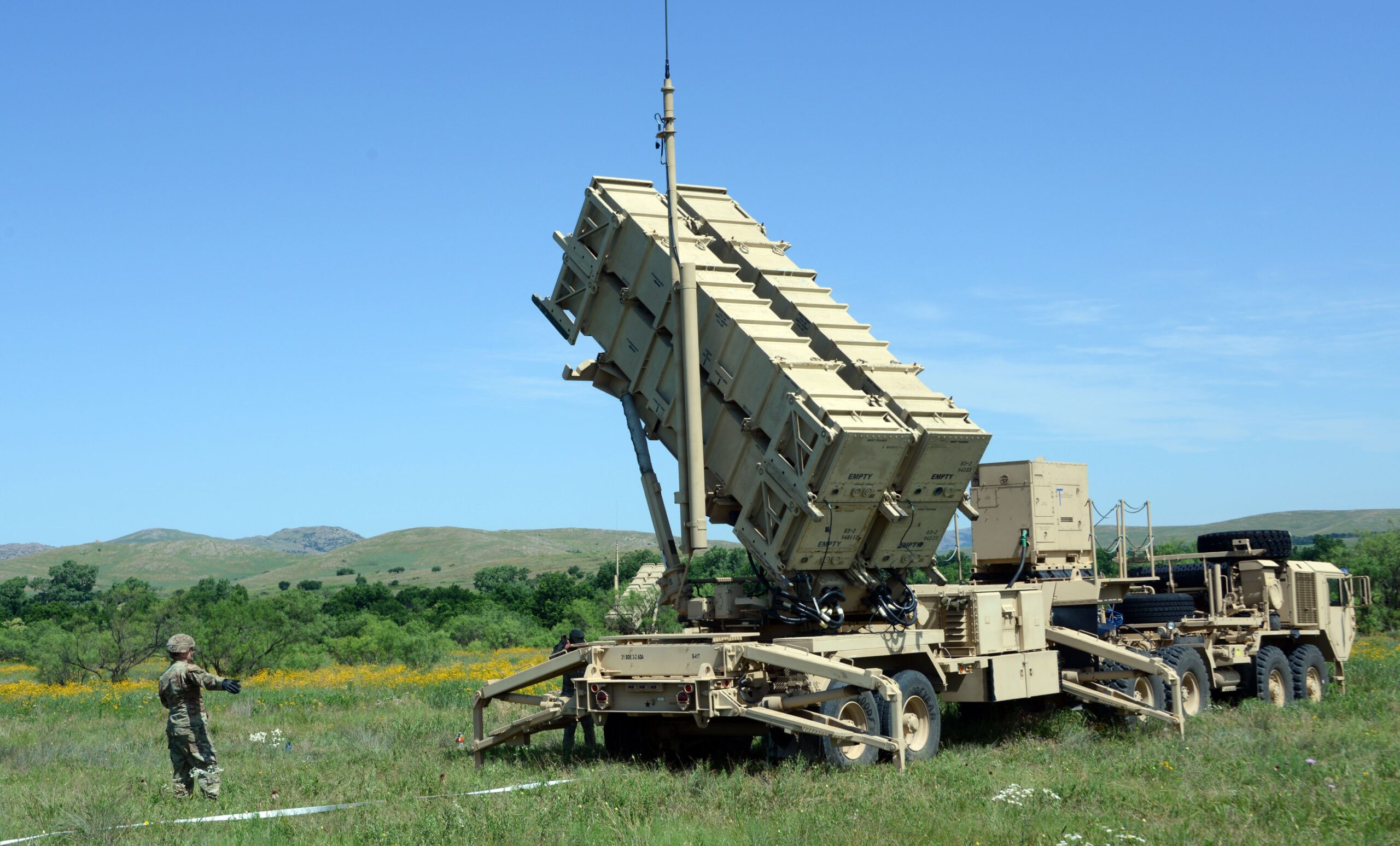
The U.S. State Department has approved a potential Foreign Military Sale of $105 million to Ukraine, covering upgrades of existing Patriot launchers (from M901 to M903 configuration), spare parts, support, training and logistics. Reuters
In context:
The $105 m is small in the grand scheme, but symbolic: it shows continued U.S. commitment to Ukraine, continued flow of defence-tech exports, and further business for the supply chain. Ukraine continues to demand advanced air-defense systems as it counters missile and drone attacks. The Patriot system is produced by U.S. defence primes (Raytheon/RTX, Lockheed Martin/LMT) and this sale is part of a broader pattern of U.S. sustaining and upgrading allies’ defence capabilities.
What’s Next:
- Defence contractors get recurring revenue: Upgrades, sustainment, training = “annuity” business rather than one-and-done big purchases. That supports steady cash flow for primes.
- Geopolitical risk stays high: Defence-export approvals reflect U.S. foreign-policy priorities. Any major shift in U.S./Ukraine policy could impact future flows. Investors in defence must watch policy as much as hardware.
- Technology & supply-chain flow: Upgrading systems means companies must maintain capability, parts, training. That supports demand for components (radars, interceptors, electronics) and services (logistics, training).
- Market signal: Small package, but signals that “Ukraine-defence” remains in active mode. That can spur investor attention to companies with Ukraine-aid exposure or European allies scaling defence.
What Can You Do?:
- Defence primes (RTX, LMT, GD, L3Harris): These companies get wins not only from new system sales but also from upgrades & sustainment. This sale falls into that category. Watching: backlog of FMS (foreign military sales), recurring service revenues, margin on sustainment vs new build, geographic exposure to Ukraine/Europe.
- Component suppliers & aftermarket services: Upgrades often include retrofits, software/hardware refreshes, training. Smaller suppliers specializing in radar electronics, missiles, software upgrades could benefit. Consider niche suppliers with decent exposure to U.S. defence export supply-chain.
- Risk side: Defence stocks tend to be less volatile in civil downturns, but they are exposed to policy risk. If U.S. political support for Ukraine wanes, or budgets shift, expectations could reverse. Also, competition from other nations (Russia, China) or shifts to alternative systems (e.g., cheaper air-defence systems) could erode margins long-term.