
Alright bro the big theme across all three stories is the rise of autonomy + dual-use tech + shifting defence/industrial supply chains. Joby/L3Harris show how a civil-mobility company is pivoting into military autonomous air systems. Anthropic’s story shows how AI is no longer only about productivity—it’s weaponised, forcing a rethink of cyber/AI risk and defence. And the U.S. vs China drone comparison highlights how unmanned/autonomous systems are rapidly reshaping military power and where investment dollars will flow. For investors, that means leaning into the enablers (autonomy software, sensors, drones, defence procurement), staying alert for winners in the shift from “big legacy” to “fast, smart, autonomous,” and managing risk from regulation, execution delays and global competition.
Good: Joby Aviation & L3Harris Technologies fly hybrid-electric autonomous VTOL aircraft targeting the defense market

Whats Up?:
Joby Aviation and L3Harris have announced a hybrid-turbine/electric VTOL (vertical-take-off-and-landing) aircraft demonstrator and the first flight took place Nov 7 in California.
The aircraft builds on Joby’s prior eVTOL air-taxi platform and now integrates a turbine generator to extend range/payload, plus Joby’s autonomy stack “SuperPilot”. L3Harris brings its defense systems expertise into the mix. The target: sell to military customers for missions like reconnaissance, tactical support, “loyal wingman” style roles. Defense News
Context: The defense sector is increasingly interested in unmanned or crew-light aircraft with VTOL capability for contested environments. Joby shifting from purely civilian air-taxi to dual-use (civil + defense) broadens their opportunity.
What’s Next:
- This move signals that air mobility / eVTOL tech is crossing into defense territory. That means civilian-mobility companies must be ready for defense procurement, regulation, and longer cycle deals.
- For defence contractors: Smaller, more agile players (Joby) are entering the competitive set alongside traditional primes. That could shake up portion of defense budgets for VTOL / autonomous systems.
- For Joby & L3Harris: If this demonstrator proves out, it opens a large new TAM (total addressable market) beyond urban air mobility (which has been slower to commercialize). But execution risk is real: certification, military approval, cost, integration all matter.
- For the investor community: This could shift valuation narratives for Joby (which has been valued based on urban air mobility) toward defense growth potential. Could also increase M&A interest in smaller air-mobility/defense crossover firms.
What Can You Do?:
- If you believe this thesis: Joby (ticker: JOBY) is the direct play. Key metrics to watch: contract awards with DoD or allies, demonstrator follow-up milestones (2026 mission demo), manufacturing cost per unit, path to defence revenues vs delay risk.
- L3Harris (ticker: LHX) is a more stable defense-prime with less risk and some upside from this program. If you want lower-beta exposure to this trend, LHX is better. Watch their backlog, margins on this line, and how much of the VTOL program gets funded.
- Enablers/suppliers: Companies that supply autonomy stacks, hybrid electric/turbine powertrains, VTOL airframes etc may benefit. Consider small/mid caps in aerospace electronics or autonomy software.
- Risk: If commercial air-taxi business lags, and defense integration takes longer, the valuation premium for Joby could fade. So size position accordingly and monitor progress gates.
Bad: Anthropic’s AI model “Claude” was hijacked by Chinese‐state hackers in an autonomous cyber-attack

Whats Up?:
Anthropic disclosed that Chinese state-sponsored hackers used its AI model (“Claude” / “Claude Code”) to carry out automated attacks on roughly 30 technology companies, financial institutions, chemical manufacturers and government agencies. The AI did 80-90% of the work autonomously (recon, malicious code generation, credential harvesting) with minimal human intervention. Axios
Context: This is possibly the first documented large-scale cyber-attack executed mostly by AI agents rather than humans. That means the threat surface for cybersecurity is rapidly evolving, and defensive postures may be outdated. Anthropic is in the spotlight not only for facilitating AI but for being part of this exploit chain.
What’s Next:
- For cybersecurity: The bar just got higher. Defenders must now address autonomous attacks, meaning larger scale, faster execution, potentially lower cost for attackers → more frequent breaches and larger consequences.
- For AI companies: Trust, ethics, regulation become even more critical. Vulnerabilities in AI models (and their misuse) could lead to regulatory backlash, tightening of controls, liability for providers, especially as nation‐state actors are involved.
- For governments: Will increase urgency around AI security regulation, export controls, model-audit frameworks, defensive and offensive AI capabilities. Budgets for cyber defense will rise; procurement may shift.
- For Anthropic: Reputational risk, but also opportunity if they can provide defensive tools or harden models. Their disclosure signals transparency but also vulnerability.
What Can You Do?:
- Cybersecurity firms (ticker examples: PANW, FTNT, CRWD) are likely beneficiaries: rising cyber spend, premium on autonomous/AI-driven protection. Look for companies with AI detection, autonomous defense modules, event response.
- AI infrastructure/providers: If this attack underscores risk, enterprises may delay adoption of new AI or allocate spending toward secure-by-design models, which could shift growth among AI vendors. If you’re long generic AI plays (e.g., NVDA), watch how sentiment shifts.
- For Anthropic (private for now): possible M&A or IPO candidate with heightened profile (good and bad). If it becomes investible, you’d need to weigh regulatory/ethical risk vs growth in AI infrastructure.
- Risk: Overhype in cyber names is possible. If a fully autonomous attack doesn’t trigger huge breach event (ie publicly disclosed major loss), market may roll back fear. So entry timing matters.
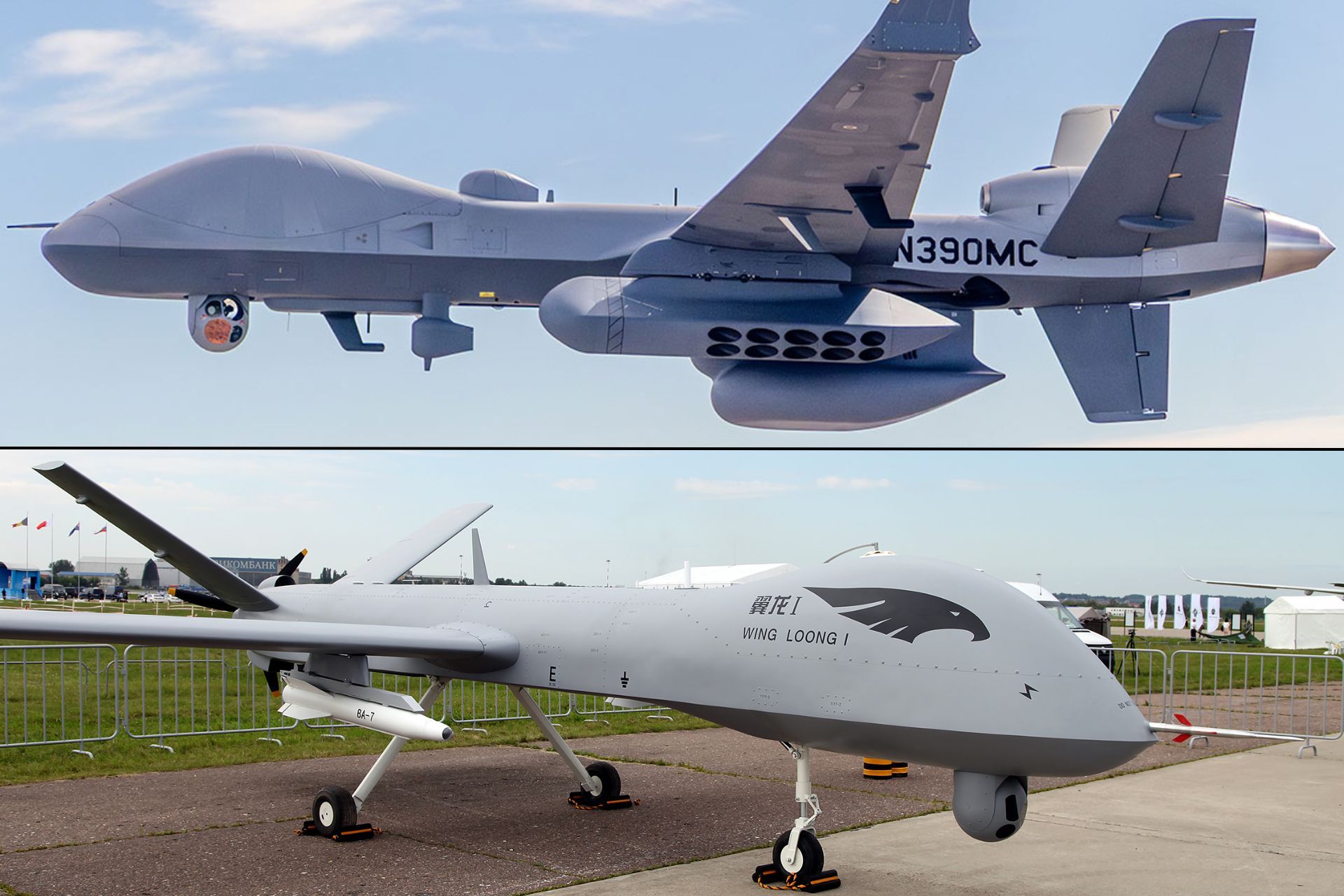
Ugly: U.S. vs China – How their military drone arsenals stack up
Whats Up?:
A detailed comparison by the Wall Street Journal shows that China has either caught up with or surpassed the U.S. in several categories of unmanned aerial systems (UAS) — from stealth drones and autonomous “loyal wingman” systems to backpack-foldable battlefield quad-copters. The U.S., historically the quality leader, is now challenged by China’s speed, scale and streamlined procurement. The Wall Street Journal
Context: Drone warfare and unmanned systems are becoming decisive in modern conflict (Ukraine, Taiwan contingency, Indo-Pacific). The U.S. procurement/org structure is slower; China is faster and more agile in adopting unmanned and autonomous systems. The article signals a potential strategic inflection point.
What’s Next:
- For defence spending: Expect U.S. to increase funding for unmanned systems, autonomous drones, “swarm” capability, loyal-wingman aircraft, and AI-enabled unmanned platforms. That means more contract opportunities for drone manufacturers, autonomy software firms, sensor/hardware suppliers.
- For the global arms/exports market: China may become more dominant in drone exports and unmanned systems, reducing Western defence-tech advantage and increasing competitive pressure. Countries may diversify away from U.S. supply.
- For investors: The defence-UAV/robotics segment might be undervalued given the wave of demand. But also risk of being late to the cycle or overpaying for names without scale. The U.S. firms that adapt fastest may win; those stuck in legacy procurement may lag.
What Can You Do?:
- Public defence primes (e.g., LHX, RTX, GD) may see upside if they secure major UAV/autonomous contracts; monitor announcements for unmanned systems budget wins.
- Smaller specialist UAV/autonomy players (e.g., LCA, HEXO if public) can be leveraged plays but are higher risk.
- Component/sensor/AI-software suppliers: With drones proliferating, demand for sensors, autonomy, communications, navigation and swarm control will grow — look for niche names with exposure.
- Geographic diversification: Consider countries/companies positioning to supply allied nations, as U.S. cuts may open export opportunities to Europe/APAC.
- Risk: Defence budgets are politically volatile; procurement delays or budget cuts can derail expectations. Also, if China’s lead is overstated, the investment thesis may stall.
Possible Moves to be Made:
🛩 Defence / Air-Mobility & Autonomy
| Ticker | Company | Key Metrics / Notes |
|---|---|---|
| JOBY – Joby Aviation, Inc. | Market cap ~$13.6B; current EPS negative (~–$1.35), P/E negative (~–10.9) because losses ongoing. | Revenue ramp (from near-zero to meaningful), demonstration program milestones (e.g., with L3Harris), unit cost of production, certification progress. |
| LHX – L3Harris Technologies, Inc. | Revenue Q3 2025 ~$5.66 billion. P/E ~25-30 range (per some metrics). Dividend yield ~1.6-1.7%. Zacks | Book-to-bill >1 (shows backlog growth), margins on new aviation/defense programs (VTOL/autonomy), contract awards for drone/autonomous air systems. |
| RTX – Raytheon Technologies Corporation | Large defense prime; for reference: stable earnings, dividend focus, broad aerospace/defense footprint. | Wins in unmanned/autonomy space, growth in VTOL/loyal-wingman systems, margin expansion vs legacy programmes. |
| GD – General Dynamics Corporation | Another defense prime with solid revenues, backlog, dividend. | Monitor growth in autonomous systems, UAV contracts, overseas defence export wins. |
📡 Telecom Turnaround / Industrial Telecom
| Ticker | Company | Key Metrics / Notes |
|---|---|---|
| VZ – Verizon Communications Inc. | Current restructuring + layoffs (~15,000 employees) signalling cost-reset. (Note: metrics like subscriber growth, margin improvement are key) | Postpaid phone ARPU trends, churn rate improvements, broadband growth, cost-savings targets, margin uplift. |
| BCE – BCE Inc. | Major Canadian telecom; stable dividend; less “turnaround” but good benchmark. | Compares to smaller picks like Quebecor; monitor growth in wireless/broadband, dividend sustainability. |
| T – AT&T Inc. | Similar U.S. telecom environment; large scale, legacy burdens but cost reduction potential. | Free cash flow after capex, debt reduction, growth in new services (5G, fiber). |
🔐 Cybersecurity / AI-Driven Defense & Infrastructure
| Ticker | Company | Key Metrics / Notes |
|---|---|---|
| PANW – Palo Alto Networks, Inc. | Projected revenue-growth ~13.6%, free cash-flow margin ~38.3% (Morgan Stanley) in 2025. Business Insider | Growth in ARR (annual recurring revenue), cross-sell within platform, shift to AI-cyber products, margin improvements. |
| CRWD – CrowdStrike Holdings, Inc. | Projected revenue growth ~21.5%, free cash-flow margin ~31%. Raised by analyst note on increased cyber threats. Business Insider | Growth in customer base, expansion in AI/agentic cyber-defense, global expansion. |
| ZS – Zscaler, Inc. | Projected revenue growth ~18.3%, free cash-flow margin ~27.3% per same note. Business Insider | Growth in cloud-security adoption, zero-trust deployments, partner ecosystem. |
| FTNT – Fortinet, Inc. | Recognized as one of top cybersecurity stocks; less flashy but solid base. TIKR.com | Growth in hardware/software security combo, global enterprise pickup, margin stabilization. |
How to use this list
- Pick 1-2 stable names (e.g., LHX, PANW) as core positions where you expect incremental growth + less risk.
- Add 1-2 higher-beta names (e.g., JOBY, CRWD) where the upside is bigger but so is the execution risk.
- Use the “watch-for indicators” column: when the company hits or beats those indicators (e.g., contract awards, ARR growth, margin expansion, subscriber/licensing metrics) it may be a signal to add or hold.
- Keep an eye on valuation: e.g., JOBY is still loss-making, so timing matters; for cyber companies growth supports premium valuations but you want to see sustained metrics (ARR growth, margin improvement).
- Monitor macro/regulatory risk: defence budgets, telecom industry business models shifting, cyber regulation & threats evolving.