
Alright bro here’s the synthesis: We’re seeing three major moves that all hinge on big-capital, infrastructure, and long-term orientation. Toyota is doubling down in the U.S. battery manufacturing game, Anthropic is betting massive on AI infrastructure, and Chevron is shifting from just hydrocarbon volume to infrastructure that powers compute. If you’re investing, the common theme is: look beyond the glamour (EVs, AI models, oil) and into the infrastructure enabling them (battery plants, data-centers, power generation). The winners will be those who secure the tightest supply chains, build where the power/grids are ready, and execute before the crowd catches on. If you’re selective and time your positions right, there are levered plays here — but they all carry execution/risk hangovers.
Good: Toyota Motor Corporation pledges up to $10 billion additional investment in its U.S. operations
Whats Up?:
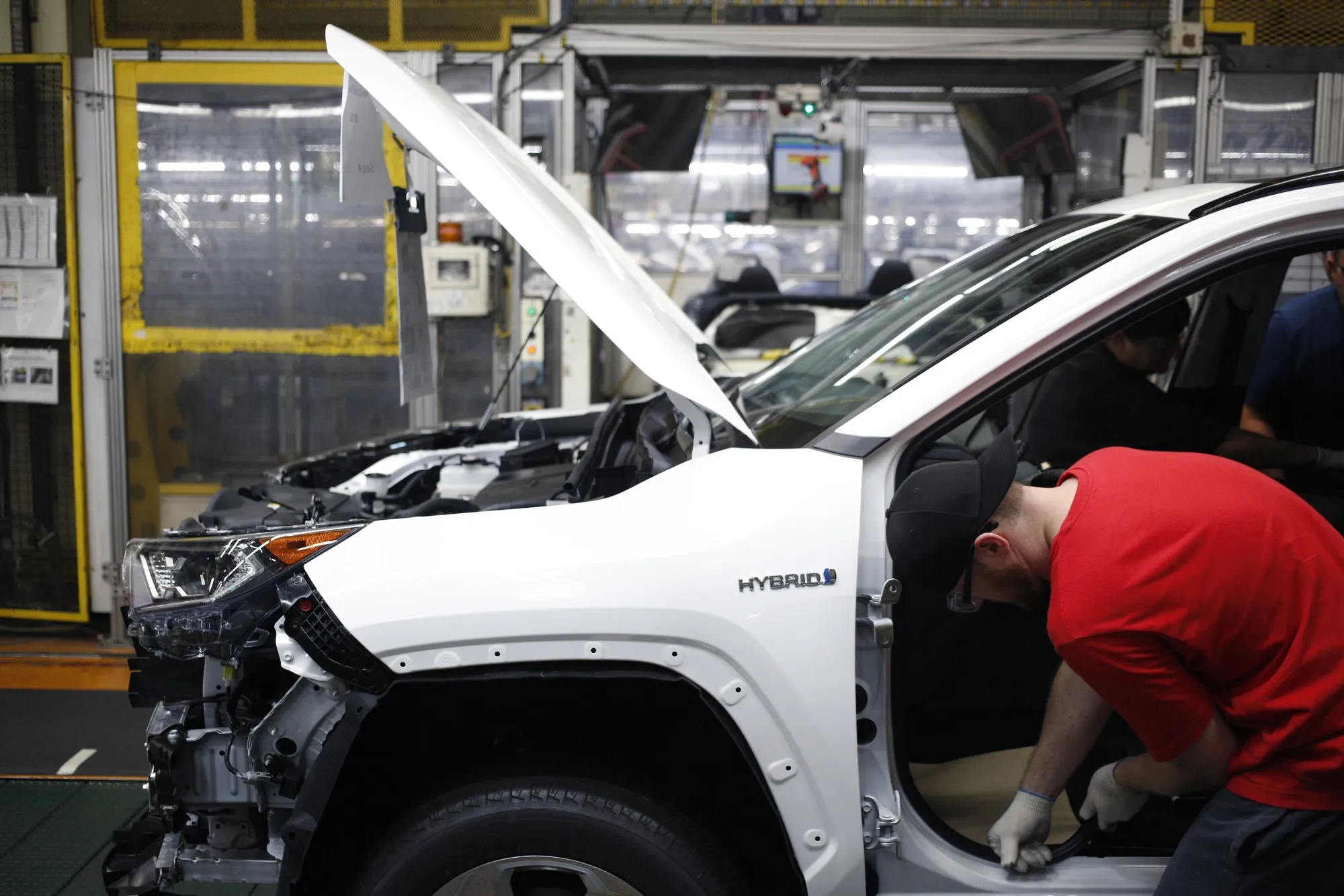
Toyota just opened its new battery manufacturing plant in Liberty, North Carolina (approx. $14 billion facility) and at the same time announced it will pump up to $10 billion more into its U.S. operations over the next five years.
Some context: This is Toyota’s first large battery-plant outside Japan and signals strong commitment to U.S. manufacturing, especially around EV/hybrid battery supply. The Economic Times
They also say that the total U.S. investment since Toyota began operations will reach nearly $60 billion.
What’s Next:
- For Toyota: This locks in more U.S.-based production, which can mean lower logistics/supply disruptions, and will help them compete in the EV/hybrid battery race. But it also means heavier fixed-cost base and risk if battery demand growth slows or margins compress.
- For the battery / EV ecosystem: Local U.S. battery manufacturing gets a boost; U.S. suppliers (cells, modules, battery management systems) might benefit. Also, competition in the battery supply chain tightens.
- For regional economies: The North Carolina plant and similar investments will bring jobs (5,000+ at the plant) and strengthen American supply-chain resilience. Toyota USA
What Can You Do?:
- If you’re bullish on Toyota (ticker TM), this investment signals a long-term US growth engine. Key things to watch: battery production ramp-up numbers, incremental margins from U.S. battery operations, how this affects their global cost structure and EV portfolio.
- For battery-supply chain plays: Companies that supply to Toyota’s U.S. battery plant (cells, modules, BMS, raw materials) could see order growth. If you know names that supply North Carolina plant, this might be a leveraged opportunity.
- Risk / timing: The payoff won’t be instantaneous. The $10B commit is over ~5 years. If EV demand growth disappoints or battery cost declines accelerate, the return could be slower. So position size accordingly and track EV adoption vs. expectation.
Bad: Anthropic PBC commits $50 billion to build U.S. AI data centers
Whats Up?:
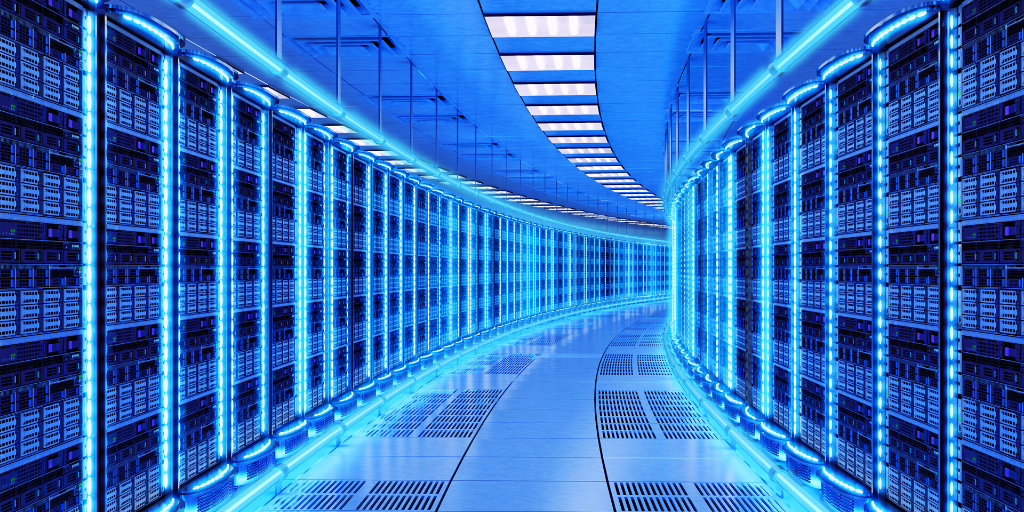
Anthropic (the AI startup, backed by big names) announced it will spend $50 billion to build specialist data centers in the U.S. (Texas & New York) to support its growth in AI model training/inference. Bloomberg
Context: Because large-scale AI models demand massive compute + power, infrastructure is now a central constraint. Anthropic is doubling down to own more of that infrastructure rather than rely purely on external cloud. This positions them to be a more serious competitor.
What’s Next:
- Infrastructure arms race: The big players are going all-in. This level of infrastructure commitment raises the barrier to entry for smaller players, consolidating advantage among the few with deep pockets.
- Capital intensity & risk: $50B is huge. If margins from AI models shrink, or compute costs fall faster than monetization, this could weigh on returns. Also, power/real-estate/regulatory risks around data centers become larger.
- Supply-chain ripple: Companies that build/operate data centers (servers, cooling, power, networking) may see upside. Also the power/workforce demands will grow, which could stress regional grids.
What Can You Do?:
- Play infrastructure enablers: Identify companies that supply the hardware, cooling, power solutions, data-center builds. These firms may see multi-year tailwinds thanks to Anthropic and peers.
- Watch compute cost trends: If these big infrastructure commitments start driving down the cost of model-training per flop, then model providers may compress margin—so providers of models (or investors in them) should monitor unit economics closely.
- Speculative angle: If Anthropic gets “better infrastructure = better model” advantage, its competitive position strengthens. If you can get exposure (directly or via partners), you may capture growth early. But remember: this is long horizon and high risk.
Ugly: Chevron Corporation picks West Texas for its first AI data-center power-project
Whats Up?:
Chevron is launching its first power-project to serve an AI data center in West Texas, using natural-gas fired power (off-grid) with target start by 2027. They’re negotiating for ~2.5 GW of capacity initially. Bloomberg
Context: With AI/data-centers consuming enormous power, major energy/industrial companies are moving to supply the power. Chevron sees this as part of its strategy beyond oil/volume – a “value story” around reliable cash flows and new infrastructure.
What’s Next:
- Energy demand evolution: Data-center power now becomes a growth path for traditional energy companies. For the energy sector, volume growth may be slower, but value via infrastructure & premium contracts might pick up.
- Regional power-infrastructure stress: West Texas may see increased load, new transmission/substation builds, regulatory/permits issues — risk of delays, cost overruns, grid integration challenges.
- Strategic repositioning of Chevron: Signals that even oil/major energy firms recognize the shift to compute/infrastructure demand and are re-directing capital accordingly.
What Can You Do?:
- For Chevron (CVX): This is a diversification path. Track the project’s FID (final investment decision), the customer(s), contract terms (power price, duration). If successful, it adds new earnings streams beyond oil.
- For energy/infrastructure supply chain: Firms that build power-plants, high-voltage transmission, grid-integration providers may benefit. Also natural-gas producers/suppliers that feed such plants could see incremental demand.
- Risk-adjusted upside: This project is a few years out (2027+). Investors should treat it as optional future growth, not baked-in. If you buy Chevron for this, monitor announcements and incremental disclosures; don’t assume it’s already priced in.
Possible Moves to be Made:
TOYOTA / EV & BATTERY MANUFACTURING SUPPLY CHAIN
Toyota Motor Corp (TM — NYSE)
- Why it matters: $10 B U.S. expansion = huge EV/hybrid battery play, localized supply chain = Inflation Reduction Act credits, less FX drag.
- Watch: 2026 battery-output ramp, U.S. hybrid margins, share of EV mix vs. ICE.
- Investor move: Conservative long-term hold for stability + EV exposure; decent dividend floor (~2.5 %).
Panasonic Holdings (PCRFY — OTC)
- Why: Longtime Toyota and Tesla battery partner; expands alongside Toyota’s NC plant.
- Watch: North-American cell production, supply contracts, cost-per-kWh trends.
- Angle: Supplier leverage on U.S. battery buildout = operating-leverage kicker.
Albemarle (ALB — NYSE)
- Why: One of world’s largest lithium producers; benefits from Toyota’s U.S. gigafactory demand.
- Watch: Lithium carbonate prices, U.S. downstream refining policy, supply-chain deals with OEMs.
- Angle: Cyclical bet on EV adoption curve; scale in near commodity lows.
Applied Materials (AMAT — NASDAQ)
- Why: Equipment for semiconductor-grade manufacturing also used in battery/energy systems.
- Watch: Capex guidance tied to energy-storage lines; AI + EV dual exposure.
- Angle: Quiet pick-and-shovel across both sectors (EV + AI fabrication).
ANTHROPIC / AI INFRASTRUCTURE & COMPUTE SUPPLY CHAIN
Nvidia (NVDA — NASDAQ)
- Why: Obvious GPU backbone. Anthropic’s own data-center build will still need Nvidia silicon.
- Watch: Supply tightness, data-center revenue mix, margins on H200/B100 cycles.
- Angle: Play the compute scarcity theme — but trim if valuation >25× sales.
Super Micro Computer (SMCI — NASDAQ)
- Why: AI server integrator. Anthropic, xAI, OpenAI all rely on similar rack-level vendors.
- Watch: Order backlog, lead times, gross-margin expansion as custom builds scale.
- Angle: Operationally geared to AI buildouts; more volatile than NVDA but higher torque.
Digital Realty Trust (DLR — NYSE)
- Why: Owns and operates hyperscale data centers globally. Anthropic’s $50 B program = tenant demand.
- Watch: Power availability (MW energized vs. booked), leasing spreads, cost of debt.
- Angle: REIT yield + AI growth tailwind = hybrid income + secular story.
Schneider Electric (SBGSY — OTC)
- Why: Provides electrical gear, cooling, automation for large data centers.
- Watch: Order intake from North American hyperscalers, margin on energy-management products.
- Angle: Lower-beta infrastructure beneficiary of the AI boom.
CHEVRON / ENERGY-FOR-COMPUTE + NATURAL GAS INFRASTRUCTURE
Chevron Corp (CVX — NYSE)
- Why: West Texas AI-power pilot = strategic bridge from hydrocarbons to “digital power.”
- Watch: FID approvals, ROI on power projects, nat-gas margin sustainability.
- Angle: Conservative yield play (4 % +) with optional AI-energy upside.
NextEra Energy Partners (NEP — NYSE)
- Why: Renewable developer with grid-scale assets — likely partner class for data-center PPAs.
- Watch: Debt refinancing progress, new PPA wins with hyperscalers, cash-available-for-distribution.
- Angle: Dividend growth + direct exposure to renewable power demand from AI/EV buildouts.
How to trade the themes
| Theme | Time Horizon | Risk Profile | Best Entry Plays |
|---|---|---|---|
| Toyota / EV battery | 2-5 yrs | Medium | TM, PCRFY, ALB |
| AI Infrastructure | 1-3 yrs | High | NVDA, SMCI, DLR |
| Energy for Compute | 3-7 yrs | Low-Medium | CVX, NEP |
Bottom line
The meta-theme here is infrastructure as leverage. Toyota is buying production certainty, Anthropic is buying compute certainty, and Chevron is buying future power certainty. For investors, this means:
- Don’t chase hype — own the inputs that make these mega-projects possible.
- Favor firms with pricing power in bottleneck resources (power, chips, skilled labor).
- Use 6- to 24-month windows to build positions before each project’s revenue inflection hits.