
Alright bro: All three stories are about bottlenecks and workarounds. In Silicon Valley, the choke point isn’t GPUs — it’s power, which delays AI capacity and reshuffles where data centers get built and which suppliers get paid first. In China, the workaround to U.S. tech dominance is cost-efficient AI at massive but targeted capex levels, which can undercut pricier U.S. offerings abroad. And in biotech, when U.S. rules block embryo editing, capital looks to friendlier jurisdictions and lower-controversy “picks-and-shovels.” As an investor: model energization timing (DLR/OWL), assume rising global competition on model price-per-task, and, in gene editing, bias toward tools and diagnostics while you wait for regulation and payers to catch up.
Good: Silicon Valley AI data centers are sitting idle…because there isn’t enough power
Whats Up?:
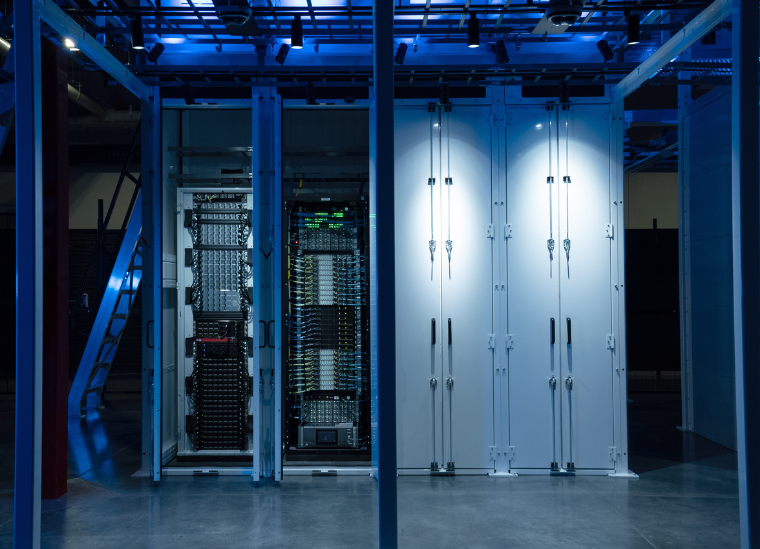
Two massive new data-center builds in Nvidia’s backyard (Santa Clara) are basically empty shells waiting on utility power. The projects include sites from Digital Realty and Stack Infrastructure (owned by Blue Owl Capital); one of them dates back to a 2019 application and still isn’t fully energized. The core bottleneck isn’t racks or GPUs — it’s grid capacity, interconnection queues, and long-lead electrical gear. In other words: even in the world’s AI capital, electrons are the gating item.
What’s Next:
- AI capacity = power capacity: Buildouts can slip years if utilities can’t deliver. That slows time-to-revenue for landlords and delays GPU utilization (bad for depreciation math, good for pricing power if supply stays tight). Bloomberg Law News
- Knock-on supply chain stress: High-voltage transformers, switchgear, and substation work are now the critical path, not server installs. Expect longer lead times and more pre-ordering/allocations. Bloomberg Law News
- Geography shuffle: Hyperscalers and AI startups will chase megawatts to friendlier grids (Texas, VA, the Nordics, Middle East), pushing new DC clusters away from traditional Silicon Valley footprints. (This is the explicit implication of the Santa Clara delays.)
What Can You Do?:
- Data-center REITs (DLR) & infra owners (OWL): Watch disclosure on “energization timing,” pre-leased vs. revenue-generating MW, and liquidated damages. Slips can ding near-term FFO but support longer-term pricing if supply is constrained. Track backlog of grid upgrades per market in investor decks. TipRanks
- Grid & electrification suppliers: Transformers (Hitachi Energy, GE Vernova), switchgear/breakers (Eaton, Schneider) and EPCs with utility substation chops should benefit as developers front-load electrical procurement. Look for book-to-bill and lead-time commentary. (Inference from Bloomberg’s utility-driven delays.) Bloomberg Law News
- NVDA and GPU ecosystem: Idle shells mean some near-term under-utilization risk where power is late, but structurally this supports tight GPU supply/demand and premium pricing. Listen for hyperscaler remarks about “power-constrained deployment” on earnings.
Bad: Why Jensen wasn’t crazy to warn about China’s AI momentum

Whats Up?:
Semafor lays out that, despite U.S. export controls, China’s big tech players are still charging ahead. Goldman Sachs expects Chinese leaders to spend $70B+ in 2026 on AI infra (data centers, chips). Yes, U.S. spend is projected far larger (about $490B in 2026), but the key is China’s growing self-sufficiency and cost discipline. Alibaba-backed Moonshot just launched a new model four months after its last one, reportedly trained for ~$4.6M — a fraction of U.S. training budgets — and DeepSeek’s “trained-cheap” narrative is part of that trend. The takeaway: “good enough + cheap” can win a lot of global, non-frontier workloads.
What’s Next:
- Cost-down competition: If Chinese models keep shipping viable capability at much lower training costs, price pressure hits U.S. model APIs and enterprise contracts outside highly regulated or premium tiers. semafor.com
- Domestic chip pull-through: As Chinese capex shifts toward homegrown silicon and stacks, the ecosystem flywheel (frameworks, boards, software) strengthens despite export controls. semafor.com
- Global adoption split: Many buyers don’t need AGI-class models; they’ll pick reliable, affordable options — which can tilt market share in emerging markets and cost-sensitive segments.
What Can You Do?:
- U.S. AI platforms: Build “mid-tier” offerings and TCO-based pricing. If you’re underwriting names with usage-based revenue, haircut international growth where Chinese alternatives are strong; watch gross-margin mix on model-API lines. (Based on Semafor’s cost comparisons.) semafor.com
- China AI supply chain: Hardware, memory, and domestic accelerators stand to capture redirected spend. Track CAPEX disclosures from BAT (and their hosted-model marketplaces) for signs of faster local stack adoption. semafor.com
- Founders/operators: If you’re infra-light, consider model-agnostic routing: cheapest model that meets SLA per task. This arbitrage gets more attractive as Chinese models compete on price/perf.
Ugly: Tech titans are bankrolling embryo gene-editing

Whats Up?:
WSJ reports a SF startup called Preventive has raised around $30M from prominent tech figures (including Sam Altman and Brian Armstrong) to advance embryo gene-editing aimed at preventing hereditary disease. Because germline editing is banned in the U.S. (FDA can’t even review human trials), the company explored more permissive jurisdictions like the UAE for eventual work. Parallel to that, startups are already selling polygenic embryo screening for traits/disease risks — a gray zone fueling a broader “designer baby” debate.
What’s Next:
- Regulatory brinkmanship: Serious money + overseas options = pressure on U.S. regulators and ethics boards; expect louder calls for harmonized rules, registries, and preclinical standards before any implantations. Wall Street Journal
- Market bifurcation: One lane is medical (eliminating monogenic diseases); the other is trait optimization. The latter will face heavier backlash and insurer pushback, slowing mainstream uptake. Business Standard
- Public-perception whiplash: Any misstep (safety, secrecy, or a rogue clinic) could trigger moratoriums that set the field back years — investors should price headline and policy risk.
What Can You Do?:
- Picks-and-shovels over headline risk: If you want exposure without “designer baby” baggage, look at enabling tools— high-fidelity editors, delivery vectors, off-target detection, embryo screening lab workflows, and sequencing/analytics vendors. These benefit regardless of where clinical boundaries land. (Synthesis from WSJ plus industry practice.) Wall Street Journal
- Jurisdictional diligence: Any private bet here needs a regulatory map (UAE, U.K., select EU states) and a contingency plan for data/biobank governance. Price legal and PR spend into your model. Wall Street Journal
- Insurance & outcomes: The unlock for real TAM is payer acceptance for severe monogenic conditions. Track early health-economic studies (lifetime cost offsets vs. editing upfront). If payers bite, adoption accelerates. (Inference from WSJ’s medical-prevention focus.)