
Today’s trio is all infrastructure and power projection: GIP’s Aligned bid says AI-data-center MWs are the new toll roads; BofA’s earlier-than-expected Fed cut tees up a friendlier discount-rate backdrop (with whiplash risk); and China’s tailless fighter underscores an arms-race in sensors, autonomy, and air dominance. Playbook: own the bottlenecks/enablers in data-center power gear and grid buildout, trade rate-sensitives with tight risk around the Fed meeting, and keep exposure to defense primes/sensors leveraged to Indo-Pac modernization.
Good: BlackRock’s GIP Circling Aligned Data Centers (~$40B)

What it is:
BlackRock’s Global Infrastructure Partners (GIP) is in advanced talks to buy Aligned Data Centers for ~$40B, one of 2025’s largest deals. Aligned runs a big footprint across the U.S., Canada, and South America, and has been raising multi-billion equity/debt to scale power-dense, AI-ready capacity. Abu Dhabi–backed MGX may tag along as a co-investor. Net: this is a bet that AI compute = long-duration real assets (power, land, interconnects, long leases), not just a hype cycle.
What it will do:
- Digital infra → core infra: Data centers keep graduating from “niche REIT” to infrastructure with utility-like cash flows. Expect more mega-deals and sovereign money piling in.
- Power is the moat: Sites with available megawatts and substation/permit head starts will price at a premium; backlogs for transformers, switchgear, and high-voltage EPC tighten further.
- Private market comps reset: A ~$40B print lifts valuation marks for adjacent platforms and could compress cap rates where power can be added.
How you can benefit:
- Own the bottlenecks: Tilt toward grid gear, EPC contractors, transformers, HV cable, liquid cooling, optical interconnect, and HBM supply—they monetize regardless of which AI tenant wins.
- Follow the power map: Favor utilities/transcos expanding interconnect capacity near AI clusters; screen AI-heavy DC REITs with real, near-term MW adds, not just land banks.
- Event-trade the spread: If a definitive deal lands, watch arb spreads and any required co-investment/financing—vol can create entries in suppliers leveraged to Aligned’s capex plan.
Bad: BofA pulls Fed Cut Forward to October

What it is:
BofA Global Research moved its call for the next Fed rate cut up to October (from December), citing a cooling labor market—even as other banks see two cuts this year or a different cadence. Futures pricing (FedWatch) has been leaning that way too. The twist: a government data gap complicates visibility, but BofA thinks the current conditions already justify a move.
What it will do:
- Front-loaded easing risk: An October cut could steepen the curve at the front end, pop rate-sensitive equities, and ease IG/HY spreads—while raising “over-easing” chatter if growth re-accelerates.
- Dollar drift: A sooner cut softens the USD at the margin, helping risk assets and commodities; path will still hinge on subsequent Fed signaling.
- Data-dependent whiplash: With major releases delayed/patchy, alt-data and weekly claims will swing expectations—expect higher macro headline volatility around the meeting.
How you can benefit:
- Duration with protection: Add belly duration (3–7y) or quality credit before the cut; pair with options hedges in case guidance comes in hawkish and reverses the move.
- Rate-sensitives screen: Screen homebuilders, utilities, staples, DC REITs—names with leverage to lower discount rates—but avoid those lacking earnings support if the cut is “one-and-done.”
- FX & commodities: If you’re long cyclicals, consider a USD hedge; oil/gold can catch a bid on easier policy and softer dollar—express via calendar spreads or options around the meeting.
Ugly: China’s Tailless Next-Gen Fighter (J-36/J-50 class) — Best Look Yet
What it is:
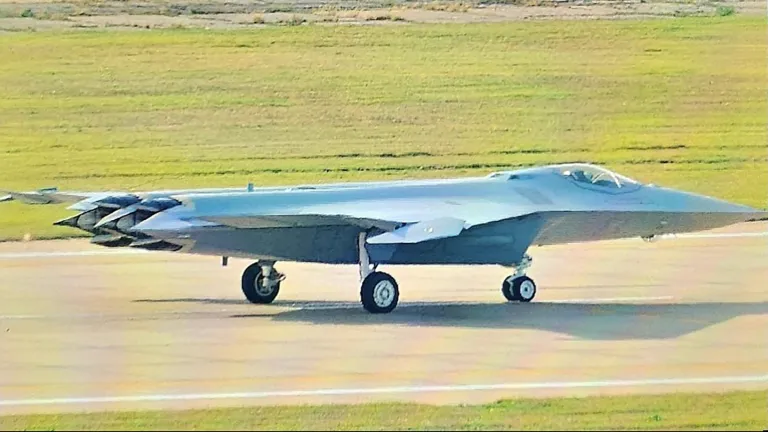
Fresh videos/photos this year gave the best look at China’s tailless, stealthy, next-gen fighter (often labeled J-36/J-50 in open-source chatter). The airframe shows a flying-wing/diamond planform and triple-engine rumor mill, all pointing at 6th-gen goals: lower signature, higher efficiency, and big sensors/AI-assisted combat. Multiple sightings suggest an active flight-test program.
What it will do:
- Regional airpower shift: If matured, a tailless design with advanced sensors and networking complicates Western air dominance assumptions in the Western Pacific. The War Zone
- Procurement ripple: Expect counter-air/ISR upgrades across Japan, Australia, U.S. forces: more AAMs, IRST, EW, long-range sensors, and counter-UAS; pacing threat drives budgets.
- Industrial learning curve: Frequent test flights imply a robust prototype-iterate cadence at Shenyang/CAC—closing gaps in materials, engines, and mission systems over the decade.
How you can benefit:
- Defense primes & sensors: Watch air-defense, EW, and sensor champions (radars, IRST, datalinks) and missile houses aligned to Indo-Pac requirements. Budgets and awards tend to follow the pacing threat.
- Counter-UAS & autonomy: Increased counter-air & counter-drone spend lifts players in networked shooters, decoys, and autonomous wingmen concepts.
- Supply-chain enablers: Aerospace materials, thermal management, and propulsion suppliers with Asia-exposure or U.S./allied programs can see multi-year demand.