
What Happened
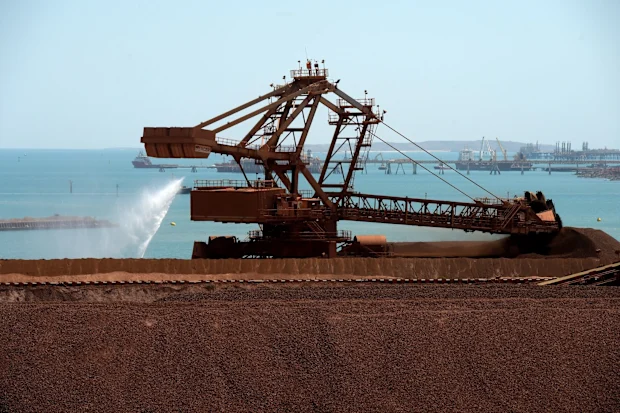
- China’s customs authorities reportedly froze certain iron ore cargoes from BHP (Australia) due to a pricing dispute. The dispute concerns “advance pricing mechanisms” (APMs) or forward pricing contracts that China contends BHP is using to inflate or manipulate pricing beyond spot or benchmark references.
- The freeze is not across the board: it appears selective, affecting specific shipments pending resolution or renegotiation between BHP and Chinese buyers.
- The action is interpreted as a pressure tactic: China’s steelmakers/exporters, under cost stress, may be pushing back against high iron ore costs, and regulators are acting to enforce more “fair” pricing mechanics in contracts.
Why It Matters — Strategic & Market Implications
1. Supply Chain Risk & Contract Price Uncertainty
One of the core risks in commodity supply contracts is that downstream buyers challenge pricing mechanisms if market conditions turn. This disruption injects uncertainty into contractual pricing, potentially setting precedents for other bulk commodity exporters (copper, coal, etc.).
2. China Buyer Leverage Has Grown
China is the dominant import market for iron ore. That gives buyers substantial leverage over major suppliers. If regulators back buyers in disputes, the balance of power in future contracts may shift further in favor of Chinese steel and smelting industries.
3. Downward Pressure on Iron Ore Price Premiums
If more cargo freezes or disputes escalate, Iron ore price benchmarks or contract spreads may compress. Premium cargoes (high-grade, low impurity) may lose relative margin. Broad market may reprice downward in response.
4. Export Country / Company Risk Reassessment
Commodity exporters (BHP, Rio Tinto, Fortescue, Vale) may need to revise risk discount, credit assessments, counterparty risk, and trade finance exposures. The threat of cargoes being detained/disputed becomes part of their political risk.
5. Precedent for Other Commodities
If China is willing to act strongly in iron ore, similar pressures may emerge for coal, copper, LNG, rare earths, etc., especially where China is a dominant buyer. Exporters in many sectors should reassess exposure.
Investment Plays & Positioning
Given this development, here’s how I’d position or tilt the portfolio:
| Play / Exposure | Rationale | What to Monitor / Entry Signals |
|---|---|---|
| Major iron ore producers likely to withstand pressure | Tier-one producers with diversified off-take contracts, flexible pricing, capitalization and risk absorption are better positioned to absorb disruptions and renegotiate. | Monitor which exporters impose contractual clauses, which cargo shipments are affected, and how quickly BHP or others renegotiate. |
| Alternative iron ore / regional suppliers | Suppliers to markets not dominated by China (e.g. India, European steel, Southeast Asia) may benefit if buyers redirect demand away from China-linked cargoes. | Shipping flows, cargo re-routing, changes in import patterns (China reducing, other nations increasing). |
| Commodity risk premia & derivatives | Iron ore futures, steel scrap spreads, related derivative instruments may see increased volatility or risk premium. Hedged exposure may pay. | Volatility in iron ore futures, basis spreads, margin calls; interregional arbitrage. |
| Logistics & port / transshipment players | Disputes may cause rerouting, cargo stacking, storage demand, or port congestion — benefiting those with flexible infrastructure. | Port throughput changes, warehousing demand, shipping route changes, stockpiling or cargo storage. |
| Premium cargo / quality producers | High-grade ore (66% Fe+, low impurities) may retain stronger margins even under pricing compression, relative to lower grade cargoes. | Marginal grade price spreads, offers in tender notices, premium discounts. |
Risks & What Could Escalate Further
- Retaliation or spillover: BHP or Australian authorities may respond diplomatically or legally; China may freeze other exporters or commodities in reaction.
- Contract renegotiation precedent: If Chinese buyers successfully press all exporters to accept lower pricing formulas, margins across the iron ore sector may compress.
- Cargo loss / demurrage costs: Frozen cargo implies storage, demurrage, insurance and financing exposure for exporters. Those costs may cascade into contract pricing.
- Policy intervention volatility: If China imposes punitive taxes, export restrictions, or changes import regulation broadly in response, entire iron ore trade flows shift.
- Demand drop intensifies pressure: If steel demand (domestically or globally) slows, pricing leverage further tilts toward buyers, making disputes more painful for producers.
Scenario Outlook & Valuation Impact
| Scenario | Assumptions | Outcome / Impact | Major Risks |
|---|---|---|---|
| Base Case | Dispute resolved via renegotiation, a few cargoes delayed, medium term contract terms softened. Exports continue with minor margin impact. | Minor compression of spreads, small downgrade in sector valuation, cautious sentiment among miners and exporters. | Prolonged renegotiation, cargo backlog, reputational harm. |
| Upside Case | Producers force back, diversified markets absorb excess, pricing pressure contained, contracts preserved | Short-term volatility but medium/long term hold value, exporters maintain margins, investor confidence restored. | Buyer pushback, precedent for broader renegotiation demands, overexposure to Chinese volume. |
| Downside Case | Cargo freezes expand, other exporters affected, contract terms shift massively downward, margin collapse | Significant earnings cuts in iron ore producers, sector devaluation, stranded cargo, cash flow stress, possible asset write-downs. | Demand shock, increased buyer leverage, widespread contract disruption, political escalation. |
What to Watch (Signals, Catalysts)
- Official statements from BHP and counterparties in China concerning resolution terms or renegotiation.
- Additional cargo freezes or expansion of freeze to other exporters (Rio, Vale, Fortescue).
- Changes in Chinese import tender mechanisms, benchmarks, or policy guidance on APM pricing.
- Port / customs data showing delayed cargo receipts, stockpiling, or rerouting.
- Iron ore price differential headlines (benchmark vs actual cargo price spreads).
- Earnings guidance changes by major miners or suppliers referencing pricing risks or contract adjustments.
Bottom Line
China’s freeze on BHP cargoes over pricing disputes is a reminder that in commodity markets, buyer power and contract structure matter as much as geology. For exporters and investors, this elevates counterparty and jurisdictional risk as material variables. The key will be how BHP and others respond: whether they cave, fight or diversify. In the short run, expect volatility and margin compression pressure; over time, modular, diverse contracting, premium cargo focus, and markets outside China will be safer bets.