
Overview
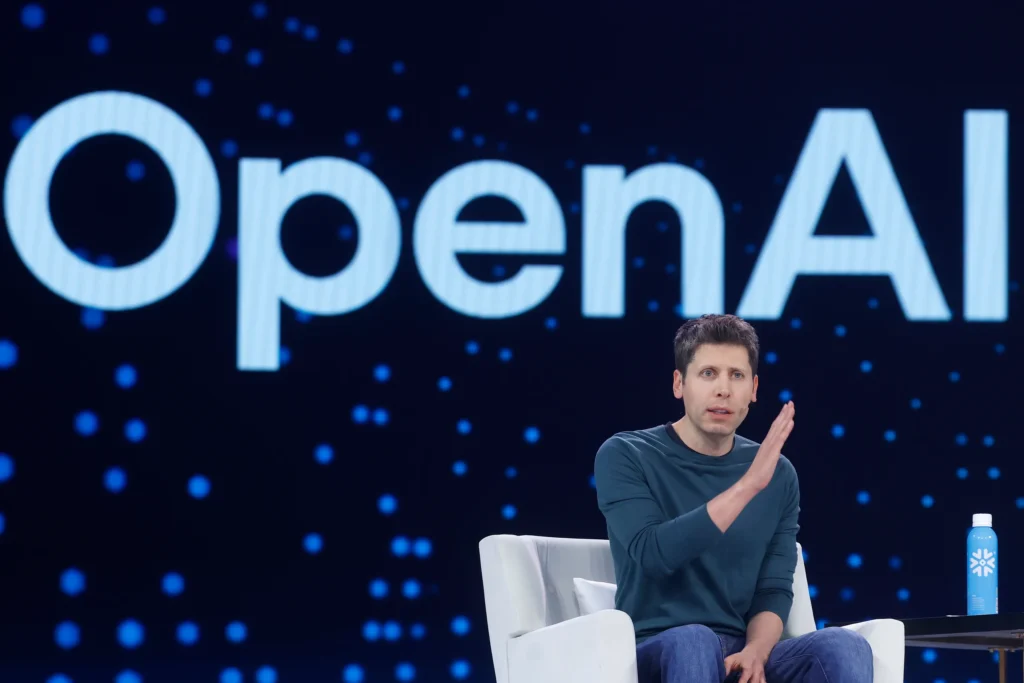
Sam Altman, CEO of OpenAI, delivered a forceful message at a time when the company is committing to massive infrastructure expansion and grappling with how to finance it. According to TechCrunch, Altman responded to comments made by CFO Sarah Friar (which she later retracted) about seeking government “back-stop” guarantees for infrastructure financing.
The key points:
- OpenAI is pursuing an ambitious build-out of data-centres and AI computing capacity. According to Reuters reporting, the company expects to end 2025 with an annualised revenue run-rate above $20 billion and is looking at commitments of about $1.4 trillion over the next eight years.
- Amid this backdrop, Altman publicly stated that OpenAI does not want the U.S. government to bail it out if it fails. He affirmed that if OpenAI “screws up and can’t fix it… we should fail, and other companies will continue on doing good work and servicing customers.” Reuters
- This position directly contradicts earlier remarks by the CFO who suggested the company was seeking some guarantee or “back-stop” from government to reduce financing cost. TechCrunch says Friar’s comments raised eyebrows and were quickly walked back. TechCrunch
In short: Altman is signalling strong self-reliance and accountability — they’re not seeking a “too big to fail” status or expecting taxpayer rescue.
Why This Matters: Themes & Drivers for Investors
From an investor-lens, several strategic themes emerge:
- Mega-capital build-out with infrastructure risk
The $1.4 trillion commitment over ~8 years indicates OpenAI is entering a capital-intensive phase (data centres, chip partnerships, compute capacity). Infrastructure and investment scale matter, and financing cost and scale execution risk are critical. - Shifting financing assumptions
The CFO’s original comments pointed to a financing model involving government guarantees — cheaper debt, higher leverage. Altman’s stance removes that safety cushion: financing must stand on its own merits, which raises the bar on execution, profitability and cash-flow. - Accountability & industry signalling
By saying “we should fail” if things go wrong, Altman is signalling a kind of market discipline — no government rescue, stake-holder risk remains real. This can reassure some investors (less moral-hazard) but also heightens risk if targets aren’t met. - Competitive ecosystem and sector risk
Altman mentions “other companies will continue … servicing customers” if OpenAI fails. This implicitly acknowledges the broader AI ecosystem is competitive and no single player is indispensable. From a portfolio perspective, it weakens a “monopoly” or “unassailable moat” argument for OpenAI. - Regulatory & public policy context
The matter of government guarantees or bailouts intersects with policy: with AI being strategic infrastructure, whether firms get special treatment from governments is a broader issue. Altman’s distancing may reflect caution around political/regulatory risk (e.g., future bail-out expectations, public backlash, subsidies).
Investment Implications & Opportunity / Risk Map
Opportunities
- Investors might favour firms that demonstrate disciplined capital management rather than chasing growth at any cost — this stance by Altman might suggest OpenAI will emphasise profitability, cash generation, risk mitigation.
- Infrastructure vendors, chip-makers, datacentre owners with clear financing models (without relying on government support) may attract favour — because their business model may be judged higher quality in this environment.
- The broader AI industry may benefit if OpenAI is disciplined, because areas of overspending or inefficient build-out may underperform and allow more efficient competitors to gain ground.
Risks
- Execution risk is sharply elevated: if OpenAI fails to convert its large commitments into revenue, margins, returns, the lack of government back-stop means the downside is real for investors.
- Financing risk: Without government guarantees, the cost of capital is higher. If margins compress or competition intensifies, returns may suffer more than expected.
- Market expectations are huge: Revenue run‐rates above $20 billion now, aiming for hundreds of billions by 2030 (reports) — failure to meet pace may impact valuation and investor confidence.
- Competitive risk: Altman’s admission that if they fail “others will continue” highlights that OpenAI isn’t insulated from disruption. Investors must assess the competitive landscape (Anthropic, others) and risk of being overtaken or losing share.
Portfolio Considerations
- Selective exposure to OpenAI-ecosystem: If you believe OpenAI can execute at scale, there is upside — but the elevated capital risk suggests a cautious sizing.
- Hedging or diversification: Because of the risk of under-delivery, consider diversifying into other AI players and infrastructure parts (hardware, datacenter REITs, chip supply chain) rather than concentrated bets.
- Focus on business model clarity: Firms with transparent paths to cash-flow, independent of government support, may be preferable in this environment of self-reliance.
- Monitor key milestones: Revenue progression (quarterly run rates), capital expenditure discipline, and compute-infrastructure agreements will be signals of execution. Missed milestones may lead to value reversion.
- Valuation discipline: With the “no-bailout” position, downside is less cushioned — valuations must reflect execution risk. Avoid valuations that assume near-perfect scaling.
What to Watch / Milestones
- Progress in OpenAI’s revenue run-rate and margin trajectory — will they move from ~$20 billion to higher scale with profitability?
- Capital expenditure and financing terms disclosure — debt vs equity, cost of capital, bank/market appetite without government guarantees.
- Competitive movements: how other frontier model companies react, and whether OpenAI retains leadership or margin advantage.
- Policy/regulatory news on AI infrastructure and government support schemes — while OpenAI says “no bailout”, governmental schemes or subsidies could emerge and affect industry dynamics.
- Market sentiment: if the broader AI hype softens (or investment bubble fears materialise), companies with large commitments may be punished more sharply because they’re exposed.
Conclusion
From an investor’s vantage point, Altman’s statement is important because it signals a shift in how one of the largest AI players frames risk, capital structure and accountability. It emphasises a “profit-from-execution, no safety-net” mindset. That is both a positive (less moral hazard, clearer models) and a caution (execution risk is real, conviction required).
If OpenAI executes well, this posture may enhance its credibility and value. But if not, the lack of a bailout means the downside is uncomfortably present. For investors, the theme suggests leaning toward companies with strong execution capability, high transparency on capital/returns, and realistic valuations rather than ones assuming unlimited upside with government support.