
What the Report Says
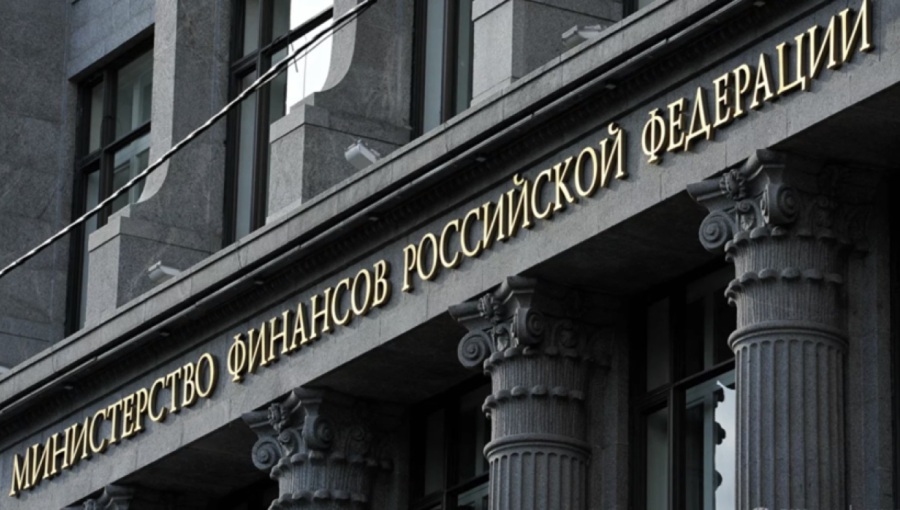
- According to the Russian Economy Ministry’s outlook submitted with the draft budget, gas prices sold to Chinaare expected to run about 27% lower than those sold to buyers in Turkey or Europe over the next three years.
- For 2025 specifically, the gap is even more pronounced: China is projected to receive gas at a ~38% discountrelative to Europe/Turkey.
- Russia appears to accept lower margins in Asia to secure more stable offtake, especially as its European market shrinks due to sanctions, import bans, and alternative supply sources.
- Earlier forecasts had also signaled such a spread: in prior years, Russian gas to China was priced ~28–50% below European equivalents.
Strategic & Economic Context
Why Russia is Doing This
- European market loss & necessity to pivot
Europe has curtailed Russian gas imports due to sanctions and energy diversification. Russia needs new demand outlets; China is the biggest, most reliable alternative. - Bargaining power tilt in energy diplomacy
Russia’s pricing to China reflects its relatively weaker negotiating position: to lock in Chinese demand, it must offer discounts. China, as the large buyer, can push harder. - Long-term infrastructure commitments
New and expanded pipelines (e.g. Power of Siberia 2 / Altai proposals) commit Russia to meaningful volumes to China. Accepting lower per-unit margins is part of the infrastructure amortization and demand growth bet. - Market segmentation & price discrimination
Russia is explicitly differentiating pricing across regional markets. Europe/Turkey become high-margin “legacy” customers (when available), while China becomes a high-volume but lower margin base. - Subsidization / trade leverage
Lower pricing to China may be part of an economic or geopolitical subsidy structure—political alignment, trade deals, energy security leverage.
Implications & What It Means for Markets & Investments
| Domain | Consequence / Impact |
|---|---|
| Margins & Revenue | Lower margins from China volumes will reduce per-unit profitability; Russia must compensate via volume. Total revenue growth from China may not offset losses from Europe. |
| Capital investment & cost structure | For pipelines, compressors, processing, long-haul transport, infrastructure fixed costs remain. Discounting means longer payback periods and higher sensitivity to cost overruns. |
| Export strategy rebalancing | Russia becomes more dependent on Asian markets; diversification risk increases (if China demand weakens). |
| Competitive pressure on alternative suppliers | Other gas suppliers (Turkmenistan, Central Asia, LNG exporters) must compete in Asia on price, which may compress margins broadly in the region. |
| Investor & sovereign balance sheet stress | Gazprom or Russia’s energy sector may face weaker cash flow, especially if costs are high or volumes don’t scale as expected. Debt servicing risk increases. |
| Geopolitical bargaining chip | Russia may use lower Chinese pricing as leverage in geopolitical or trade negotiations; China may exert more leverage in energy deals. |
| Supply security & demand elasticity risk | Because China may be more price-sensitive, large discounts risk demand flattening if energy alternatives or efficiency measures emerge. |
Risks & Headwinds
- Demand shocks / moderation in China: If China’s economy slows or its energy demand growth weakens, discounted gas sales may not deliver volume needed to make up margins.
- Infrastructure / pipeline latency & bottlenecks: Building, maintaining, and operating long pipelines (especially cross-Mongolia) is capital-intensive and exposed to delays, cost escalation, geopolitical transit risk.
- Domestic cost pressures: Upstream extraction, gas processing, transmission, and regulatory cost pressures in Russia may squeeze the margin cushion further.
- Geopolitical / sanction risk: Russia risks further sanctions or retaliation that could block pipeline supply, financing, or international partnerships, undermining export stability.
- Price floor erosion: If discounting becomes structural, it erodes the premium pricing environment for Europe and compresses expectations for other gas exporters.
- Contract mismatch risk: Long-term contracts must lock in terms amidst currency risk, inflation, and regulatory changes; those contracts may become unfavorable over time.
Playbook: Where to Position
Here’s how I’d lean in a portfolio in light of this development:
A. Core Overweights
- Russian / Eurasian energy names with China exposure
While margins may be lower, names that have secured volume contracts (e.g. Gazprom) may still benefit from stable demand and infrastructure scale. Exposure should be tempered by margin compression expectations. - Pipeline / midstream infrastructure contractors in Asia / China
Firms that build, maintain, or supply parts for cross-border pipelines or compressor stations may get contracts from growth in transcontinental gas flows. - Asian gas supply competitors / alternative suppliers
LNG exporters, Central Asian gas suppliers (Turkmenistan, Kazakhstan) who compete into Chinese markets may benefit if Russia sets price benchmarks. - Local Chinese downstream gas infrastructure & distribution
Lower‐priced gas makes end markets (power, industrial, city gas) more competitive; corporate players distributing gas internally may see margin expansions. - Energy arbitrage / hedged trading in gas markets
If gas price spreads between regions widen, arbitrage trades (e.g. between pipeline markets, LNG) may yield returns.
B. Watch / Selective Exposure
- Firms with high cost sensitivity
Upstream gas producers with high cost baselines (e.g. remote fields, deep wells) may struggle at discounted prices—these are risk names to underweight or hedge. - Debt & leveraged names in Russian energy
Companies with high leverage may be vulnerable if revenue growth falls short of currency or inflation shocks. - Commodity input / capex suppliers
Depending on the pace and scale of projects (pipelines, processing), demand for pipe, steel, compression units, digital control systems may rise. Monitor tender pipelines and contract awards.
C. Hedging / Protective Moves
- Put hedges on energy equities exposed to Europe
If Europe’s gas import collapse continues, valuations of European‐exposed gas firms may see downside; hedges may be useful. - Dual‐region exposure balance
Avoid overconcentration in Russia-oriented gas names; maintain exposure to lower-risk LNG/commodity names as ballast.
What to Watch & Key Indicators
- Official Russian pricing formula or announcements confirming discount levels and contract terms with China.
- China’s gas demand trajectory (industrial, power, city gas) and alternative supply growth (domestic gas, LNG).
- Progress and financing of major pipeline projects (Power of Siberia 2, Altai / Mongolia route).
- Pipeline capacity utilization, cross-border throughput, transit volumes.
- Margins and cash flow performance of Gazprom and other Russian gas exporters.
- Policy / sanction changes: trade restrictions, currency risk, forcing pricing adjustments.
Bottom Line
Russia’s shift toward discounting gas to China underscores the structural trade-off it faces: volume versus margin, repositioning gas exports amid the collapse of its European markets. For investors, this signals a more complex and segmented global gas market ahead. The winners will be those that secure scale, manage cost structures, and play infrastructure roles rather than resting on high margin expectations.